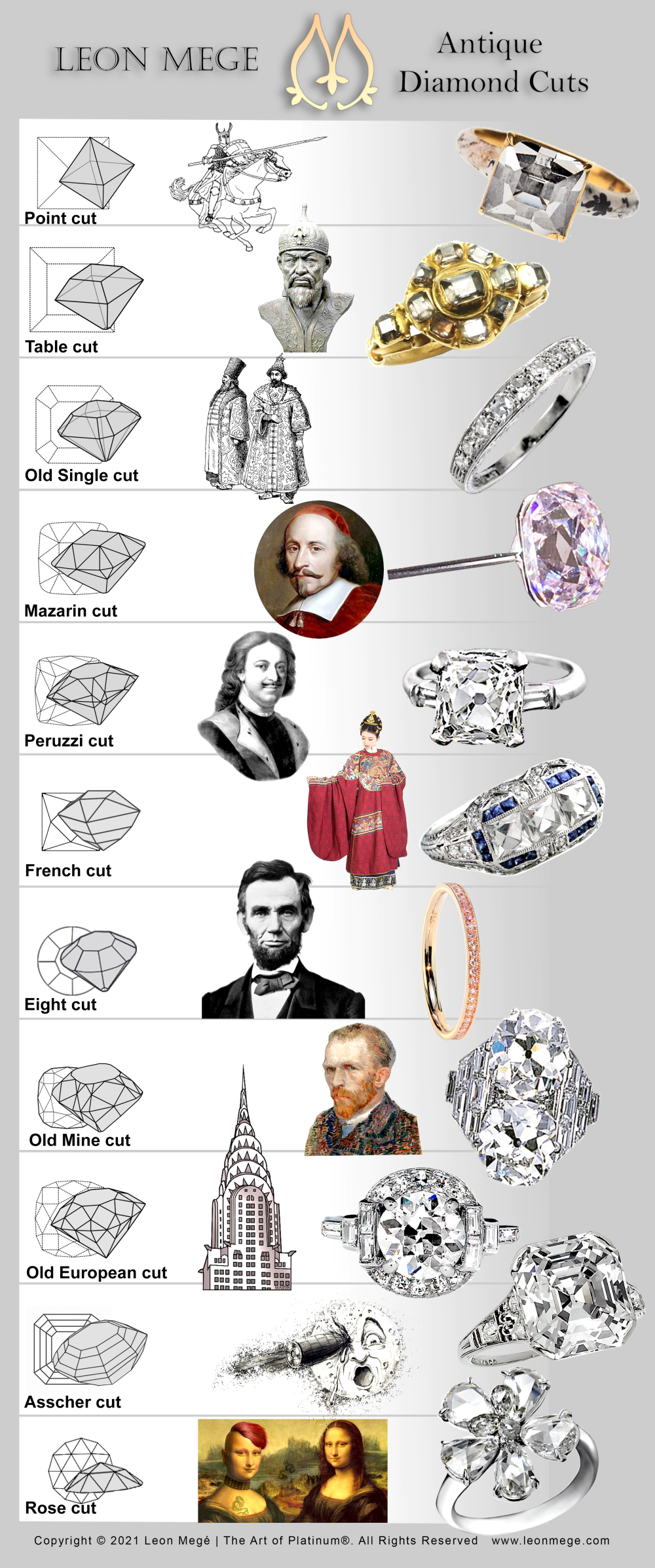
Most people are intuitively attracted to antique diamonds because vintage cuts have a distinctly retro vibe. Unfortunately, lab reports fail to differentiate between modern and antique cuts. Antique cushions are called Old Miners, and the antique rounds are Old Europeans. Other shapes are not as lucky; you must examine them to determine whether they have modern or antique faceting. True antique diamonds are scarce; they come from disassembled old jewelry. Most antique cut diamonds sold today are contemporary replicas. This fact does not diminish their beauty and value.
The most recognizable antique diamond cuts are:
Antique Advantage
Antique cuts are angelic orphans looking for a new home. They are steeped in fascinating history and charming traditions. Antique diamonds bring us closer to our roots, filling us with a sense of belonging to a bygone era.
Every antique diamond is unique. Their artisanal individuality makes up for mechanical precision. Antique diamonds were designed when candlelight was the primary source of indoor illumination, making them burst with intense fire.
Antique diamonds offer timeless romantic appeal and dazzling fire. Unlike modern cuts, there are very few antique diamonds to choose from. An antique Asscher cut is undeniably the most beautiful of all antique diamonds. It is closely trailed by Antique Cushions and Old European cuts. The classic French cut is the absolute classic among accent stones.

In popular culture, Carrie of “Sex in the City” says yes to Aidan’s proposal with a stunning Asscher-cut diamond ring after rejecting a pear-shaped diamond in a gold mounting.
When you compare a vintage diamond to a modern diamond, it’s easy to see the difference. Should the charming past radiating from every facet of an heirloom diamond be destroyed to increase the perceived value?
The answer is: No. Old cut stones are genuinely scarce and only get rarer with every passing day.
A recut diamond is identical to a diamond produced from rough yesterday. Without a historical record, it’s impossible to tell when the stone has been cut.
Unfortunately, many of the world’s most famous and historic diamonds have been recut over the centuries of their lifetimes. Sometimes it was done to improve the appearance of stones, but more often to conceal their identity for criminal gain.
Asscher cut
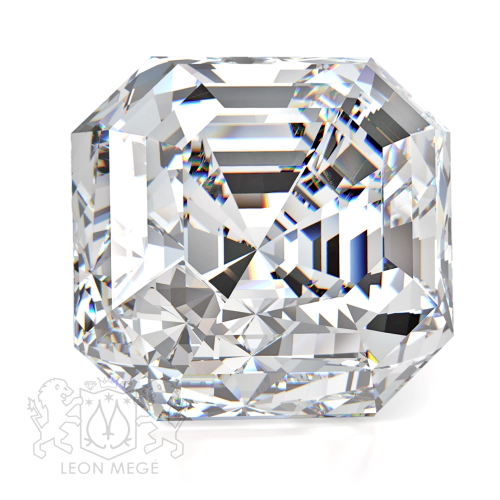
The Asscher cut, arguably the most beautiful diamond cut ever devised, captivates at first glance. Rather than scattering light into a dazzling haze, it draws you inside. It feels like peering into the deep end of a pool. Asschers distinctive hall-of-mirrors faceting gathers and concentrates light, transforming it into bold, luminous flashes that ricochet through the stone before returning to the observer.
Vintage in spirit, Swiss-watch precise, and unmistakably elegant, the Asscher cut has embodied quiet, timeless elegance. In the age of worthless synthetics, its appeal has grown stronger than ever. Where a round brilliant is all trash and flash, the Asscher is a symphony of self-assured grace and a conversation starter. Its beauty unfolds gradually, revealing a mesmerizing geometry and a sophistication that never demands attention yet invariably commands it.
make an Asscher
make a Royal Asscher
The Authentic Asscher’s signature faceting consists of concentric rows of step facets radiating from the culet to the girdle in an X-shaped arrangement known as the windmill, or Maltese cross, pattern. This unique architecture creates the Asscher’s celebrated hall-of-mirrors effect, producing bold flashes of light and remarkable visual depth. Thanks to its geometric precision and near-octagonal outline, a finely cut Asscher can rival the finest brilliant cuts in both fire and brilliance.
Asschers are routinely bundled with all square step cuts. It is true that every genuine Asscher is a square step cut; however, most square step cuts are not Asschers. This mix-up lets ignorant salespeople bundle all step-cut diamonds into a 1:1 ratio under one loose umbrella. On close inspection, the vast majority of these stones are not Asschers at all. They are emerald-cut diamonds with narrow corners and a metallic shine, lacking both the fire and the brilliance of an Asscher.
Connoisseurs distinguish a genuine Asscher by its carefully balanced proportions and an outline that approaches the octagonal rather than merely gesturing at it. The corners are not merely trimmed; they are integral to the design, creating a harmonious interplay between the windmill pattern at the center and the reflections generated by the side facets. When properly executed, the result is a mesmerizing hall-of-mirrors effect with exceptional depth, symmetry, and presence that an impostor, however confidently mislabelled, can begin to reproduce.
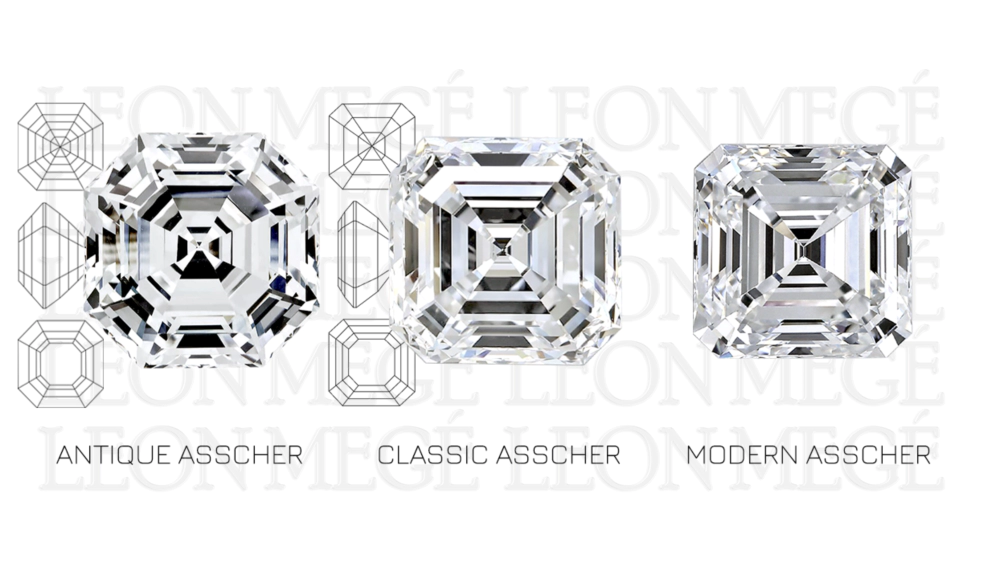
The modern “Asscher” is a square emerald cut with small corners and stepped facets. You can walk into pretty much any diamond retailer and find a modern “Asscher ” that shares only one trait with a real Asscher: step-cut faceting. It lacks the charm and appeal of the classic Asscher cut. In short, it is rather pathetic.
The Classic Asscher is a modern interpretation of the original antique Asscher cut. It combines the broad clipped corners, smaller table, and concentric step facets of the historic design but with proportions favored in contemporary cutting. Compared to an Antique Asscher, the Classic Asscher is less deep, with a lower crown and slightly narrower corners. Because the differences can be subtle, distinguishing a true Classic Asscher from the countless modern square emerald cuts marketed as Asschers requires a trained eye, as well as considerable time and patience.
Authentic antique Asschers are extremely rare and mainly found in antique jewelry. They are almost octagonal stones with a very small table, high crown, and deep pavilion. The Asscher family workshop in Amsterdam cut original Asschers, mostly from 1902 through the 1920s- 30s (the original “Asscher cut,” predating the later 74-facet “Royal Asscher” revival from the 2000s). These are genuinely scarce because production was limited; many stones have been recut over the last century to modern proportions, and what survives with the original faceting intact is a small population.
True Antique Asscher
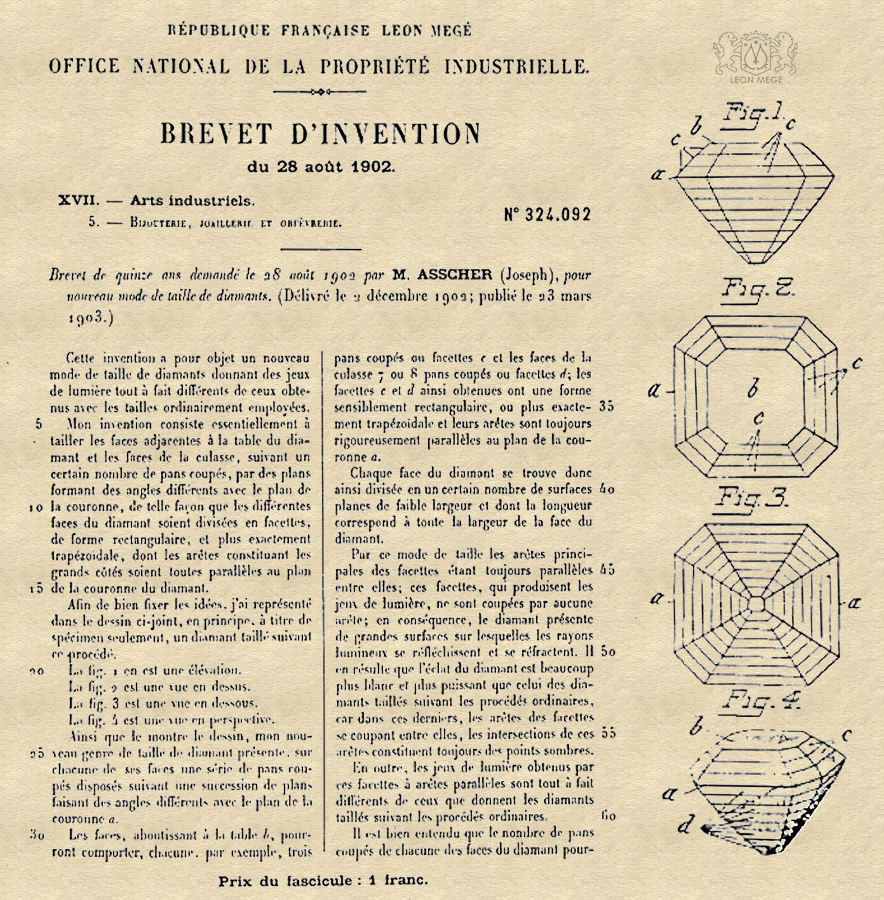
Joseph Asscher created the world’s first patented octagon-shaped step-cut diamond in 1902. An Asscher cut diamond seems to draw the eye to the center of the stone, to its magical depth, and to the source of its incredible fire. It is an octagonal cut with corners almost as wide as the sides, a small table, a high crown, and a deep pavilion. Antique Asschers are nearly impossible to find; they usually come from old estate pieces or modern replicas of the antique cut. Because of their scarcity, both antique Asschers and their replicas command premium prices.
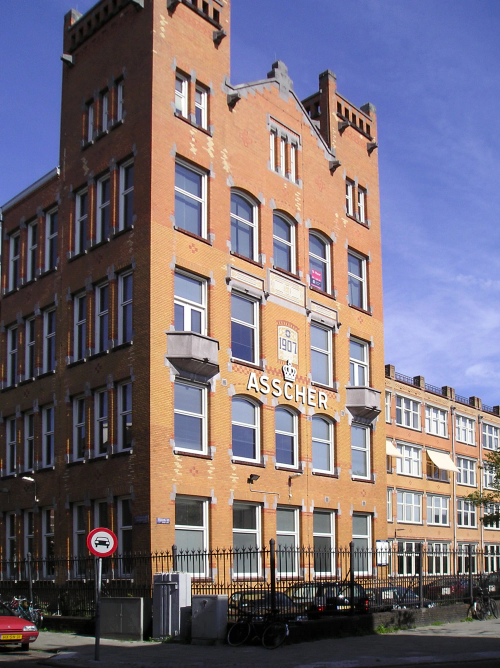
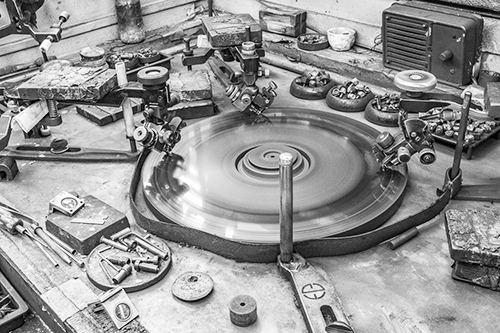
The Asscher family had been in the diamond trade in Amsterdam since 1854, when Joseph’s grandfather opened a modest little cutting workshop, the kind of place where a man could make a fortune polishing diamonds, or lose his last shirt with one careless tap of the hammer. Two brothers, Joe and Abe Asscher, built the business into one of Amsterdam’s most respected diamond-cutting factories. The Asscher Diamond Company thrived in the pre-war era, when socialites competed to see who could attach more diamonds to their genetically inferior bodies. The Asscher factory once employed 500 people. In the old days, steam-powered polishing wheels were attached to long shafts with leather belts. The original driving shafts ran the entire length of the building and remained intact even after the building was electrified.
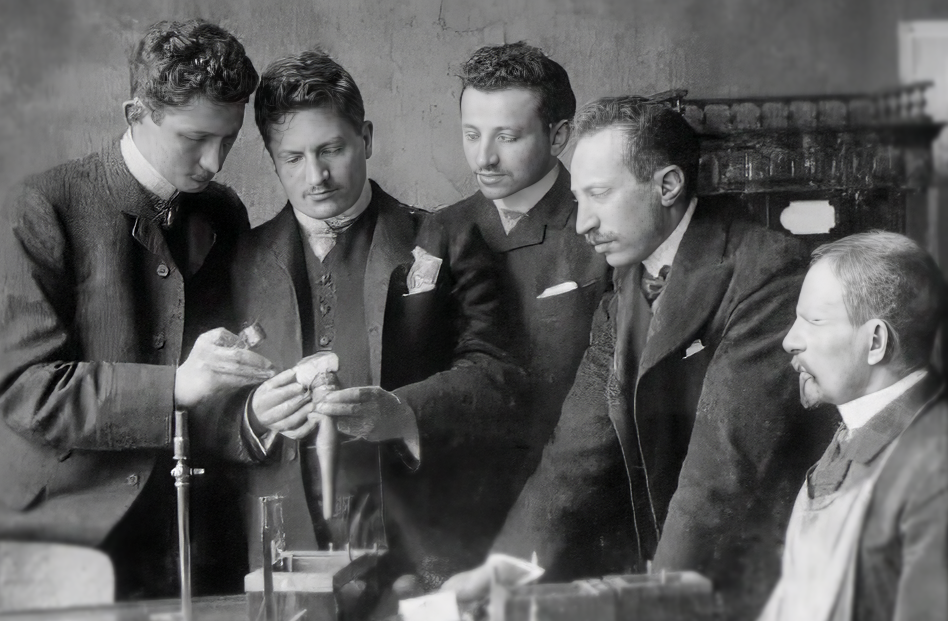
In 1903, Joseph was honored to cut the Excelsior, then the largest known diamond on Earth. Joseph earned a reputation as the finest diamond cutter among Amsterdam’s diamond elite by turning a single 997-carat rough crystal into eleven polished gems. This reputation opened the door to more nerve-wracking jobs and, sure enough, in 1907, Joseph’s real moment arrived. He was hired to cut the largest diamond rough ever unearthed, the 3,106-carat Cullinan, dug up two years earlier near Pretoria, South Africa. The Transvaal government presented the stone to King Edward VII, and in 1907 the rock made its way to Amsterdam, into the hands of Joseph Asscher.
On April 16, 1942, the Nazi occupation authorities sealed the Amsterdam Diamond Exchange and forced diamond merchants to surrender their diamonds, gems, equipment, and other assets. The Asscher Diamond Company was one of them. The Asscher family, including company president Abraham Asscher, along with nearly all of the firm’s 500 Jewish diamond polishers, were deported to the concentration camps of Westerbork and Bergen-Belsen. Only ten members of the Asscher family and fifteen employees survived the Holocaust. After the war, the surviving family members returned to Amsterdam and began the long process of rebuilding the company from the ground up.
The Cullinan cleaving legend is as juicy as unbelievable. The 3,106-carat rock had to be split into three sections on account of internal flaws. Joseph studied the enormous rough piece for six months. We do not know whether he really sat for six months staring at the stone, but he billed the crown by the hour. He finally notched a groove at a carefully calculated spot, preparing for the big moment. The first attempt went about as badly as such things usually go in third-rate sitcoms. The blade snapped in two, and nothing happened. After regrouping and tossing out the broken tool purchased at the nearby flea market, he spent a small fortune on a good Swiss-made blade and tried again.
At precisely 3:05 pm, on February 10, 1908, he took a shot of Jägermeister, mumbled something in Yiddish, hit the cleaver, and immediately passed out. After regaining consciousness, he learned the stone had split exactly as planned. Was it unbelievable stress or too much Jäger responsible for his fainting? We’ll never know. But it was a great success. Nine stones eventually came out of the various pieces. The two largest diamonds, the 530.20-carat Cullinan I and the 317.4-carat Cullinan II, are still held hostage by the British Crown Jewels; one is embedded in the Sovereign’s Scepter and the other in the Imperial State Crown.
The Story of Cullinan
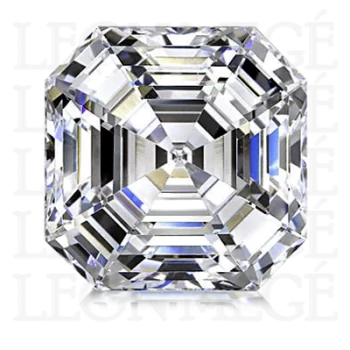
Royal Asscher
Royal Asscher® is a modern, patented cut with two additional rows of pavilion facets. The added facets, evenly and precisely distributed, deliver surprisingly strong brilliance not usually expected from a step cut. All Royal Asschers® are laser-inscribed with the brand logo and an identification number. The Royal Asscher® brand name appears on the certificate. The Royal Asschers are gorgeous, but they sell at such a steep premium that only real fans consider adding the stone to their collections.
Buying Advice: Shopping for an Asscher
Finding an authentic Asscher is nearly impossible. Aside from auctions and a few antique dealers, you won’t find a real Asscher on the open market. But if you found one, grab it immediately – you just won a lottery.
If a real Asscher isn’t available (because it doesn’t exist), the next best option is a classic Asscher with a near-octagonal outline. At any given moment, you’re limited to maybe 2-3 choices, each in a different size and color. To find a stone in the right carat size and within a couple of color grades of your target is like winning a Super Bowl with your quarterback in a coma. Don’t let this chance slip away. Once the stone is gone, the chances of finding another are next to zero.
- The most important feature of an Asscher is its unique proportions.
- Unlike other diamonds, you rarely get to choose color and clarity when you hunt for a real Asscher, or even a stone close to it. Because the real Asscher is incredibly rare, the other requirements are merely suggestions.
- Low color doesn’t make flaws in an Asscher more visible; it’s complete nonsense.
- Unlike modern brilliant cuts, antique faceting tends to minimize diamond color. As a result, warmer-colored Asschers look more natural and appear whiter than expected.
- Because step-cut faceting makes inclusions easier to see, the recommended minimum clarity for step-cut diamonds is VS1. However, due to the rarity of Asschers, any eye-clean stone, or even a stone with a minor but visible inclusion, is generally acceptable.
- Shallow depth creates a bigger face-up appearance, but it can make the stone look glassy and windowy. After all, true Asschers are, by nature, deep stones often exceeding 70% of total depth.
- Asschers offer less brilliance (sparkle, in parlance of our time) than brilliant-cut gems, but the immense fire they produce more than compensates for it.
- All natural diamonds must come with a GIA grading report. GIA is the world’s most respected diamond grading laboratory, and a lack of certification is a huge red flag.
Classic or Antique Cushion
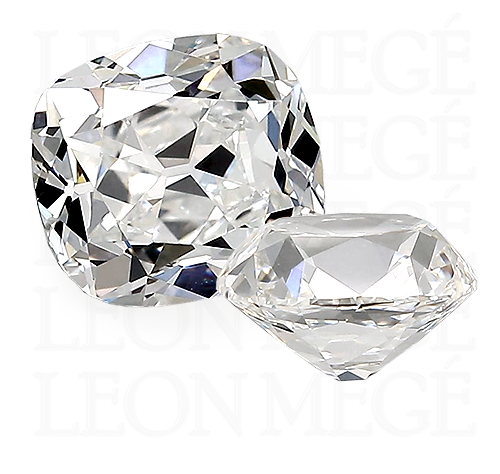
Classic (Antique) Cushions are rare, timeless, and sophisticated jewels. In the trade, they are known as Old Miners. The Antique Cushion’s high-contrast faceting mutes color perception, so it looks whiter than its modern counterparts. The Antique Cushion’s prized mix of fragmented brilliance and extreme dispersion is also unmatched.
Cushion Brilliants are essentially round brilliants with a pillow-like shape. Their pavilion facets originate at the culet and extend to the girdle in a star-like fashion. A stone loses its spot on the top of the cushion’s Mount Olympus and becomes Cushion Brilliant when it matches at least three of the following criteria:
– the table is over 53%
– the crown angle is over 40°
– lower halves are 60% or less
– the culet is slightly large
Cushion Modified combines radiant-cut facets with a cushion-shaped outline and soft, rounded corners. Modified Cushions have excessive brilliance without contrast, giving them a “crushed ice” look. Some facets terminate below the girdle. In places where the facets meet, they form bulges that complicate the ring’s construction and carry dead weight.
Antique Cushion
The traditional Antique cushion-cut diamond is a beautiful jewel. It has a pillow-shaped outline, soft, rounded corners, an open culet or a keel, a small table, and a high crown. The Classic Cushion comes with Old World flair and romantic appeal. Antique cushions are not necessarily old; Most antique cushions sold today have been recently cut.
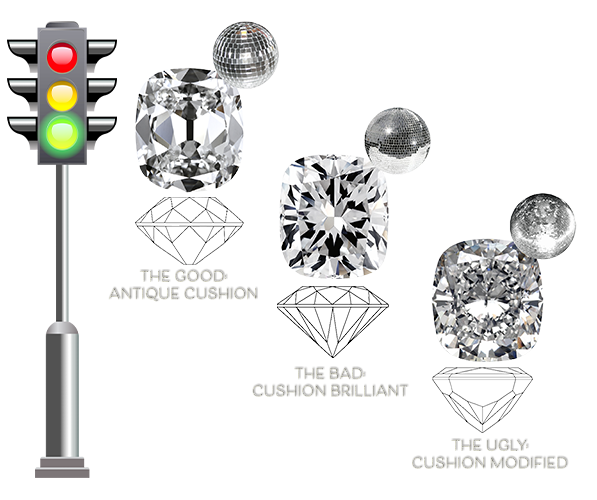
The Antique Cushion was the dominant diamond cut for centuries until the advent of the modern round brilliant, which is uniform, scalable, and easy to make, sort, and use. Antique Cushions revived and recaptured the magic of the Golden Era.
Antique cushion diamonds have superior dispersion and radiate an abundance of fire when lit by flickering candlelight. They have an open culet, a high crown, and large facets—a perfect combination of sophisticated elements for a connoisseur seeking a diamond with character and pedigree.
Antique cushions are closer to step-cut diamonds in how they transform and return light. They don’t have the dreaded “crushed ice” look of modern cushions.
GIA classifies Antique cushions as Old Mine brilliant or Cushion brilliant, depending on the crown, table, and total depth proportions.
Old European Cut - OEC
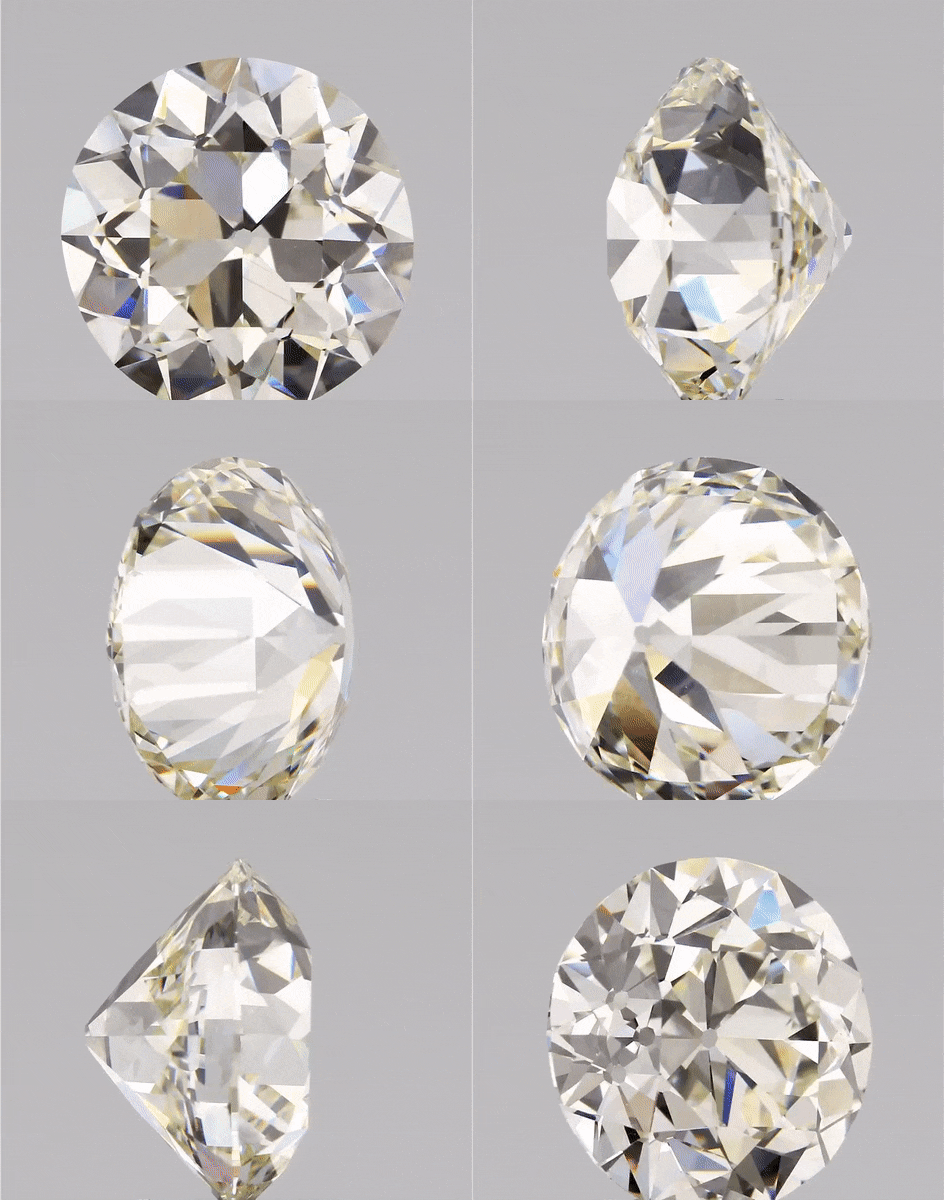
The Old European (or simply European) Cut is a vintage Round Brilliant. It became popular in the late 19th century when its predecessor, the Old Mine Cut, lost its Cushion shape and became round thanks to the invention of the bruting machine. The Old European Cut retained the rest of the Old Miner’s charms – the high crown, small table, and open culet.
The Modern Round Brilliant is a direct descendant of the European Cut. Both have the same round shape and 57 facets, not counting the culet. The proportions and angles have, however, changed drastically.
The current proportions of the Modern Brilliant inspired Marcel Tolkowsky, Henry Morse, and others to experiment with angles and facets, searching for the ideal round cut. Today, Old European-cut diamonds are found in vintage jewelry. They usually have poor symmetry, often confused with old miners.
What makes Old European cut special? Like its predecessor, the Old Miner, the OEC features spectacular “inner fire” by design. When warm, flickering candlelight illuminated the 19th-century ballrooms, the Old European’s dramatic inner fire was a diamond’s most desired property. In later decades, when wearing diamonds outdoors became common, the emphasis shifted to cuts that maximize brilliance rather than fire.
- Old European Cut diamonds have small tables and relatively high crowns.
- There is always an open, often a large culet. The culet size may vary, but it is usually large enough to be seen with a naked eye.
- The Old European diamonds are not perfectly round. Cutting diamonds by hand often resulted in an off-round shape.
- The girdle of the old-euro is usually bruted. Its frost-like appearance is different from the clear faceted girdle of a modern diamond.
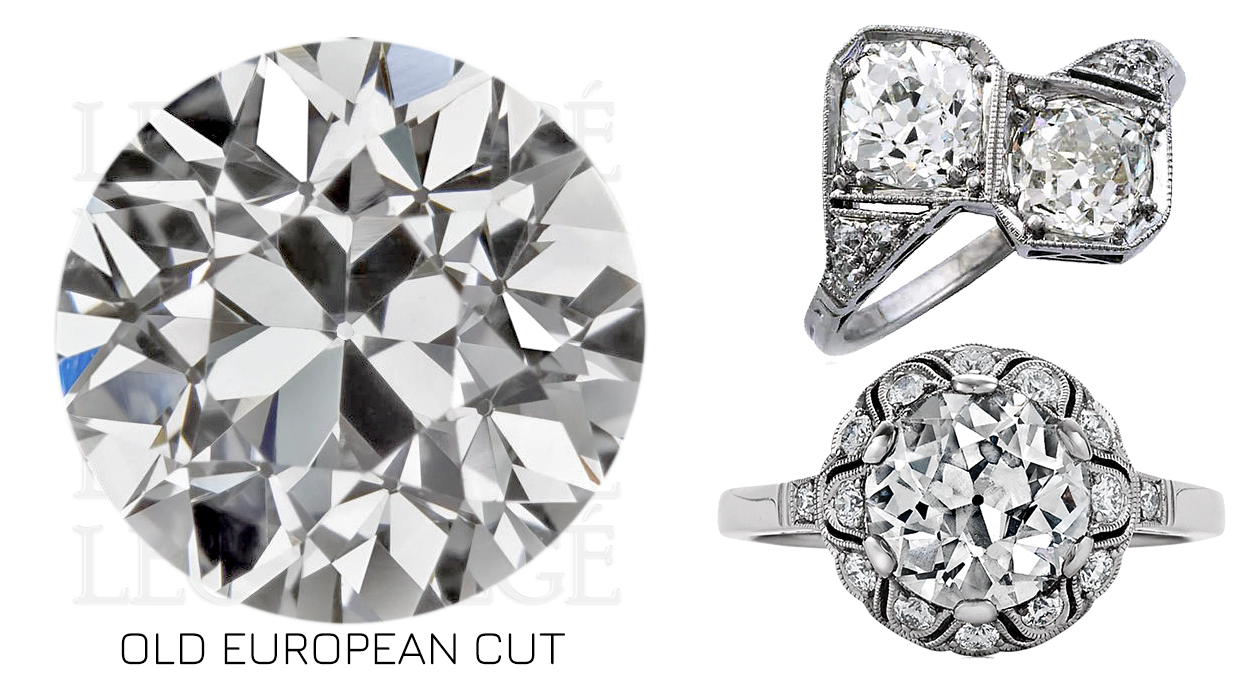
A Round diamond has to meet 3 out of 4 benchmarks to be certified as an Old European Cut by the GIA:
- A table size of less than or equal to 53%
- A crown angle of 40 degrees or more
- A lower-half facet length of 60% or less
- An open culet
GIA treats an Old European diamond as a fancy shape and does not evaluate its cut. However, Old Europeans are considered to be Round Brilliants in the diamond trade. The round shape is significantly more expensive than any fancy shape. The first brilliants, known as “Mazarins,” were introduced in the 17th century. Uniform diamond cuts did not exist until then, so each diamond had highly irregular shapes and a jumble of facets.
Before the invention of the diamond saw, a single piece of rough yielded just one stone. To maximize the yield, the European Cut was given a high crown, a small table, and an open culet. Skill and experience, rather than machinery and automation, give the Old European Cut a beautiful, organic, artisan look. The imperfections add character and timeless charm that only one-of-a-kind diamonds possess.
Old European Cuts are no longer produced. They are a prized find by collectors and history buffs.
The Transitional Cut
The Transition Cut also called the “American cut,” is a short-lived bridge between the Old European Cut and the Modern Brilliant. The experimental cut hosted a mix of modern and antique features in the same stone. The cut was invented in the 1870s by a Boston cutter and possibly a Red Sox fan. His name was Henry Morse, not to be confused with Samuel Morse, the inventor of the Morse code systems. Henry told everyone that a diamond’s beauty is more valuable than the rough yield. His goal was to find the most flattering proportions that return maximum light from inside a diamond. The diamantaires before him always strived to waste as little rough as possible during cutting. Henry, however, decided to go against the grain and waste as much rough as necessary to achieve the most sparkle.
Jubilee cut
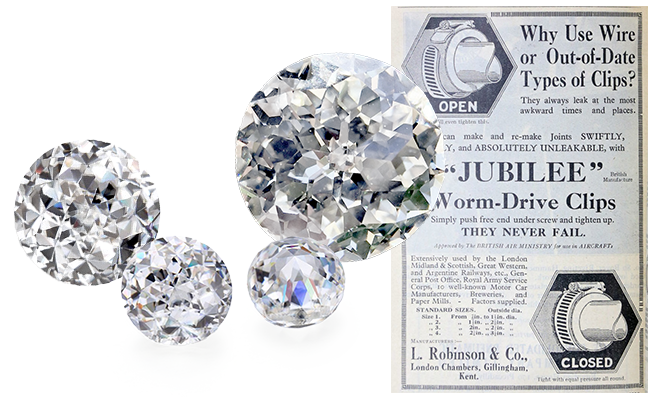
The Jubilee diamond cut is usually reserved for large diamonds. The elaborate faceting empowers a diamond to shine spectacularly. Compared to the Round Brilliant’s 58 facets, the Jubilee cut features 88 (sometimes 80) facets. Because it’s not deep and has no culet, the Jubilee has a glittering effect second to none. It is one of the brightest cuts you can find and is also extremely rare.
The Krupp cut
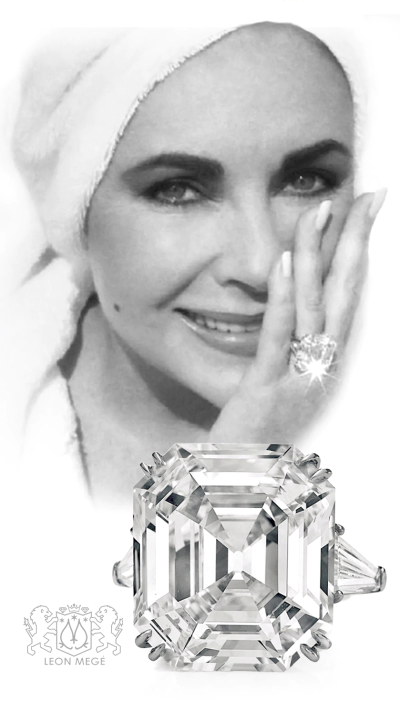
The traditional classic Asscher is a square cut with a length-to-width ratio of approximately 1.00 to 1.06. The Krupp cut is an elongated Asscher with a ratio longer than 1.1. The Krupp cut name comes from the emerald-cut diamond Richard Burton gave to Liz Taylor. Here is the diamond’s story.
In the early 1950s, German actress Vera Krupp, the trophy wife of a wealthy German industrialist, received a massive emerald-cut diamond with wide corners. Vera divorced her wealthy husband, kept the diamond ring he gave her, and moved to Las Vegas from Germany, breaking bad and partying around the town.
In 1959, the ring was taken from her at gunpoint during a robbery at her ranch. The FBI got involved because there was nothing better to do at the time at taxpayers’ expense and found the diamond at (of course, where else) a New Jersey grocery between mounds of mutz and gabagool. After the ring was returned, Vera became paranoid and pinned it to her bra strap at all times. When Mrs. Krupp passed away, the 33.19-carat diamond was sold to Richard Burton for $300k, who presented it to Elizabeth Taylor as a surprise gift.
The French cut
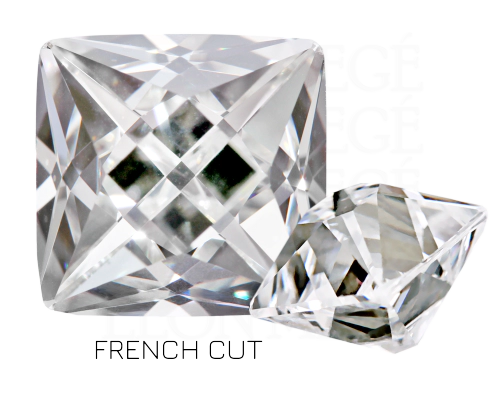
The French cut diamonds originated in the 14th century, named so because of their popularity in France. They evolved from the old Table cut. The Scissors cut is a variety of French cut with a slightly more elaborate faceting.
A French-cut diamond can be easily recognized by a rhomboid table turned 90 degrees to the diamond’s outline. The shape is usually square but can be rectangular or even trapezoid. The pavilion of a French-cut diamond is split into four plain facets, sometimes divided in half.
A French cut has a small table created by slicing one end of a well-formed octahedral crystal, and its edges have smaller facets added for extra brilliance.
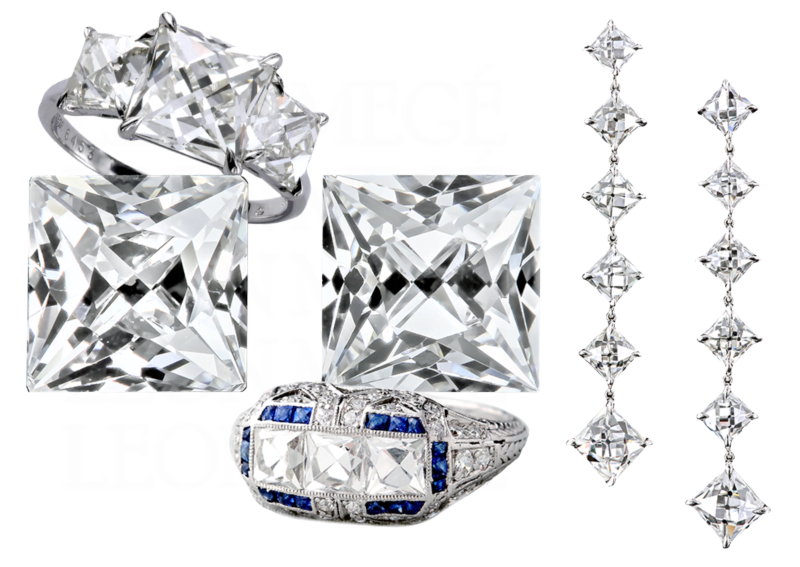
French Cuts are a rarity because they are primarily found in antique jewelry. Currently, there is a very limited production, mainly from a rare type of diamond rough – the well-formed octahedral crystals. Unfortunately, the yield is low, which results in a higher per-carat price. Top jewelry houses quickly absorb the small quantities available, making sourcing French-cut diamonds on the open market nearly impossible.
Another factor limiting the broad adoption of French cuts is their lack of uniformity. The French cuts are mainly used as accents in groups called layouts, not individually, but the lack of uniform proportions prevents using them in calibrated layouts.
The French cut is a result of the evolution of the primitive Table cut diamond into a marvel of elegance. The French cut came into fashion in the 17th century and has been used in high-end jewelry ever since. French jewelers favored these diamonds, hence the name.
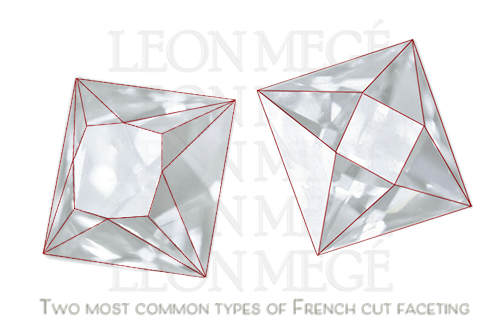
Antique-style French cut diamonds are produced using a well-formed octahedron rough. Modern French cuts are often produced by recutting baguettes and princess cuts, which have a low crown and a large table.
The French Cuts were extremely popular at the beginning of the 20th century during the Art Deco era featured prominently in the works of the top jewelers at the time. The Art Deco movement, with its emphasis on the pure geometrical forms, provided fertile ground for the wide use of French cuts in jewelry designs.
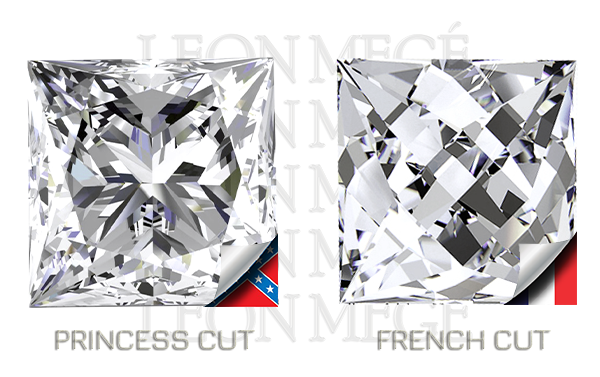
Princess and French cuts are distant relatives. They share a similar square outline. Facet’s arrangement, however, is completely different. While the French cut has charisma and elegance, the Princess cut is a square peg in a round hole.
Rose Cut
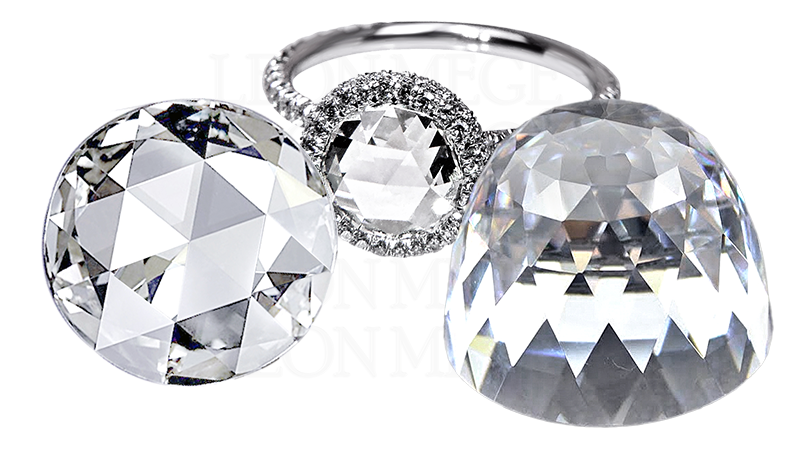
The Rose Cut is one of the oldest diamond cuts. It became widespread in the 1500s and remained popular until the early 1900s, when more complicated and precise cuts were developed. Picture a flat round diamond with a bulging pavilion and a giant table. Flip it upside down, and you’ve got a rose-cut diamond. It’s equivalent to a cabochon in diamonds.
Owing to their shape, carat-for-carat Rose Cut diamonds face up larger than any other diamond cut. This makes the Rose Cut an attractive purchase for those harboring a beer budget and a taste for vintage wine.
The crown of a Rose Cut is dome-shaped, formed by the facets meeting at the center. Because of its flat bottom and shallow depth, the rose cut reacts very differently to light than other diamonds. The absence of a pavilion results in washed-out luster and dull brilliance.
A rose-cut diamond crown has six triangular facets that resemble the petals of an unfolding rosebud. Perhaps having a drink can help you make the same connection. A conventional rose-cut diamond crown has six triangular facets arranged in a hexagon and small triangular facets completing the second row. Large stones have as many as seven or eight rows of facets.
Rose Cuts come in many shapes, although the majority are round.
Variations include the Briolette, a hexagonal Antwerp Rose, and a Double Dutch Rose, which resembles two Rose cuts united back-to-back. A Rose with a large table is called a portrait diamond. Rose-cut diamonds are timeless. They are a pretty cut that gives any jewel a unique vintage feel. Rose-cut diamonds can be used in any piece of jewelry and are exceptionally graceful in earrings, pendants, and necklaces.
The Rose Cut enjoyed a resurgence in popularity when Jennifer Anniston received a proposal with an eight-carat rose-cut solitaire, which sparked a short-lived renaissance. It’s still trendy and widely used in inexpensive fashion jewelry.
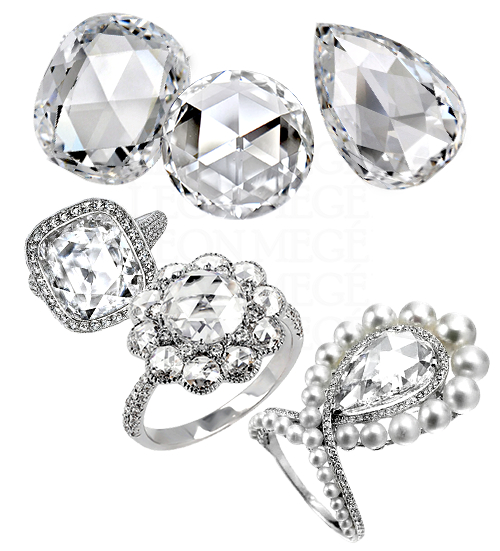
Rose-cut diamonds share proportion and faceting but come in many different shapes. The most common are round rose cuts, but there are also pears, cushions, and ovals.
Single cut
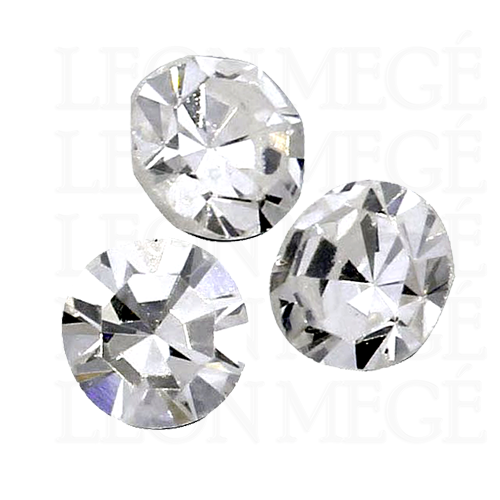
The single-cut diamond was the first intentional use of geometry to manipulate light within a stone instead of just reflecting it. Every brilliant-cut diamond today is a descendant of the early experiments with faceting done on a Flemish polishing wheel in the 15th century.
A Lasting Legacy
There is something quietly profound in that lineage. The single cut reminds us that beauty does not require complexity: that eight facets, arranged with care and intention, can capture light in a way that has moved human beings across six centuries. In its simplicity is its permanence.
To explore this interesting cut in depth, read Single Cut- Small Stones, Intense Brilliance” (opens in a separate window)
Antique pear
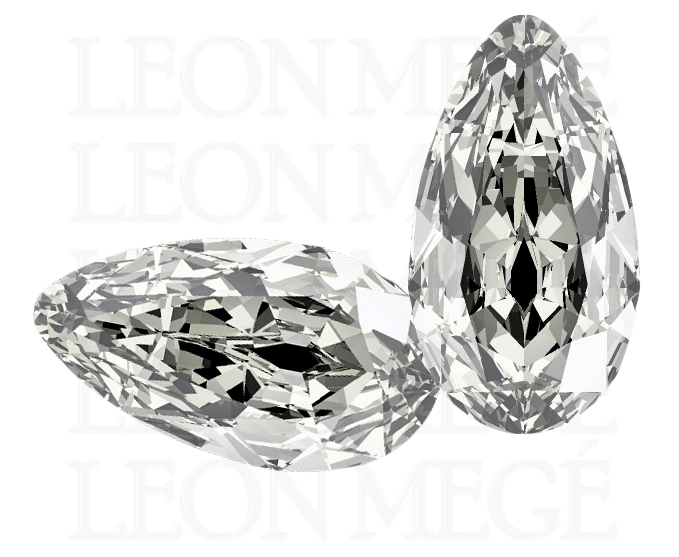
The first Pear Shape was invented in the mid-15th century by a Flemish cutter, Lodewyk van Bercken. The cut was a variation of a Rose Cut, but with a point.
The True Antique Pear is not Briolettes or Rose Cuts. Instead, it has tables, crowns, and pavilions. Its point is usually blunted or rounded, and it has large open culets. They are hard to come by; if you ever find one, do not let the marvelous stone out of your sight.
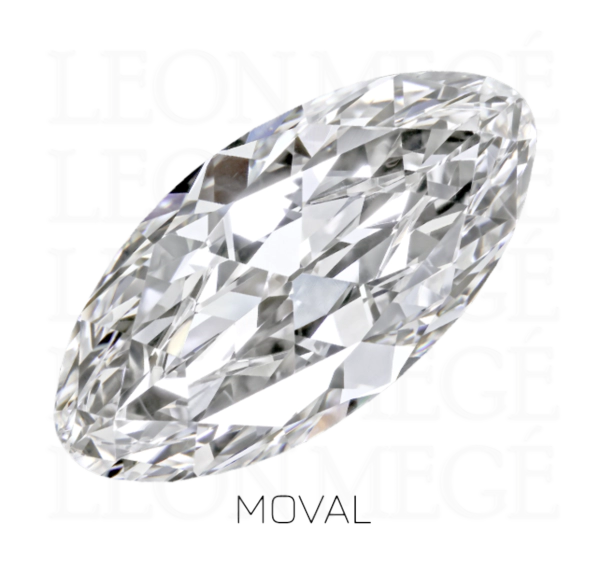
Moval
Often creating an illusion of a larger size, the Moval or antique marquise shape is the universal symbol of opulence and glamour. Moval is a gracefully elongated shape that straddles an oval and marquise. This rare and desirable diamond cut is typical of the Art Deco period.
Peruzzi and Mazarin Cuts
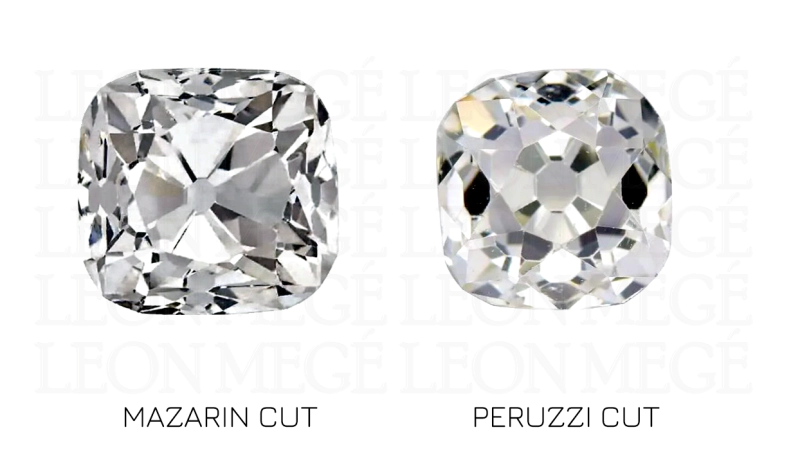
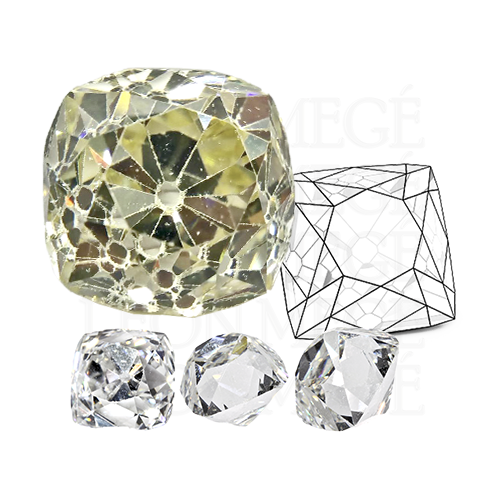
Created by Venetian polisher Vincent Peruzzi, the Peruzzi cut was one of the first “brilliant cuts” and is considered one of the oldest diamond cuts in existence. Peruzzi has 33 facets and is an ancestor of the modern brilliant-cut diamond. Peruzzi modified and improved the Mazarin cut by adding 16 more facets to create a diamond with superior brilliance.
The two obscure diamond cuts, Peruzzi and Mazarin, gave birth to the French cut through gradual transformations and improvements.
The early brilliant diamond cut created in 1650 was named after Cardinal Mazarin, who was very fond of diamonds.
Briolette
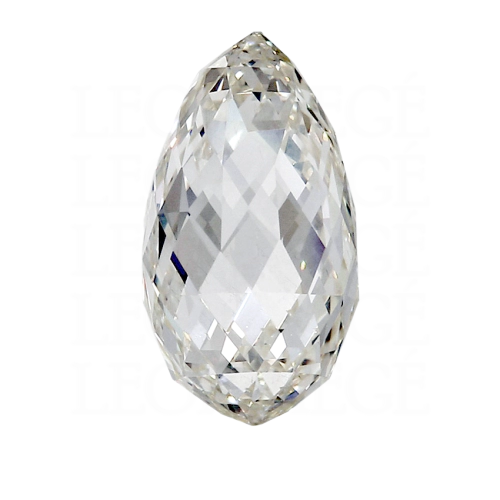
Europeans learned about briolettes in the 1600s when Jean-Baptiste Tavernier brought some from India to France. Louis IV, Marie Antoinette, Henry Philip Hope, and Persian and English royalty owned and admired diamond briolettes. Unfortunately, briolettes were the first casualties of recutting old stones into modern cuts, depriving the world of the ancient art form because the cut was deemed inefficient and wasteful.
It wasn’t until the Victorian and Art Deco periods that briolettes rose to prominence again, adhering to modern standards. Briolettes returned to the spotlight with a renewed appreciation for history, used by prominent designers spearheaded by Maestro Mege. Briolette’s subtle beauty is proving to be timeless.
Classic Asscher
The Classic Asscher is a contemporary take on the antique Asscher cut. It mixes the wide-corner, small-table, uniform-facet concept with the low-crown, shallow-pavilion proportions of a contemporary emerald cut.
The Classic Asscher cut produced today is not as deep as the Antique cut. Its table hovers at around 60%, its depth is between 65% to 72%, its crown is lower, and the corners are not as wide.
Classic Asschers are reasonably priced, but they are in a limited supply and require a trained eye and lots of time and patience to distinguish them from modern Asschers.
Portrait Diamonds
A portrait-cut diamond resembles a thin sheet of ice with step facets surrounding a large, open table. The shallow cut was typically set over miniature portraits and tiled paintings. The portrait cut is similar to the Polki diamonds and has a similar faceting.
Polki diamonds originated in India long before the Jews of Antwerp developed modern diamond cutting. Polkis kept the original rough shape and had an unfaceted, polished surface.