
Receiving a bespoke engagement ring is a milestone. Months of planning, selecting the perfect gemstone, refining every detail, and painstaking handcrafting culminate in a piece that is uniquely yours. It is also the moment when responsibility for protecting that piece passes from us to you. Getting insurance is the most responsible decision to protect your valuable asset. The best time to get coverage is as soon as you take possession, even if it must come back for sizing or adjustments. Coverage often begins the same day the policy is approved.
Why do you need insurance?
 Most couples buying their first (and hopefully only) engagement ring don’t realize the biggest risks go far beyond theft or robbery. In reality, many jewelry insurance claims involve damaged mountings, chipped gemstones, or accidental loss rather than outright theft. Policies often include coverage for “mysterious disappearance,” a term used when a piece is lost without a clear explanation and cannot be recovered. Anyone can experience this, no matter how secure their home is or how carefully they travel. A ring can slip off unnoticed, disappear during a vacation, be misplaced, or be damaged without any obvious indication of what happened. These everyday incidents are far more common than most people realize.
Unfortunately, homeowners and renters insurance policies typically provide limited jewelry coverage and often exclude common causes of loss. Specialized jewelry insurance offers significantly broader protection, including coverage for loss, theft, accidental damage, mysterious disappearance, and worldwide travel. For a bespoke piece of jewelry that represents a significant investment and requires months to recreate, insurance is about more than recovering financial value. It gives you confidence that you can repair, replace, or recreate the piece if the unexpected happens. Proper coverage lets you enjoy your jewelry as intended: worn, admired, and treasured, rather than constantly worried over.
What is typically covered by a policy?
- Theft: Jewelry stolen from your home, car, or swiped while you are out getting a drink.
- Accidental Damage: Broken or damaged settings, cracked stones, or other physical damage from impacts.
- Loss: Misplacing an item or having it slip off (e.g., losing a ring while swimming in the ocean).
- Mysterious Disappearance: An item vanishes completely, and you do not know how or when.
- Worldwide Travel: Protection while traveling globally to places where lifting fine jewelry from gullible tourists is a national hobby.
- Preventive Maintenance: Specialized policies will cover routine care like prong re-tipping and stone tightening, which is typically done for free anyway.
What Is Not Covered
- Normal Wear and Tear: Everyday scratches, fading, or tarnishing over time.
- Intentional Actions: Deliberate damage or loss caused by the policyholder.
- War and Government Action: Loss or destruction due to war, military conflict, or confiscation by civil authorities.
- Deterioration: Pieces that break down due to pre-existing structural weakness or inherent flaws.
What Documents Will You Need?
Starting a policy is generally straightforward. We will provide a sales invoice, which is often enough for an insurance company to initiate coverage. Depending on the insurer’s requirements, you may also need to provide a copy of the GIA grading report (the original certificate will be delivered with the piece) and an appraisal.
With the initial purchase from Leon Mege, we provide an in-house appraisal on demand at no additional charge. Any subsequent appraisal, update, revision, replacement, or reissuance of an appraisal will be subject to the applicable appraisal fee in effect at the time of the request.
The sole purpose of a Leon Mege in-house appraisal is to assist the customer in obtaining insurance coverage and establishing an insured value for the item. The appraisal is not intended to establish a resale value, liquidation value, estate value, tax value, or value for any other purpose. Customers may, at their sole discretion and expense, obtain an independent appraisal from a qualified third-party appraiser. An independent appraisal typically includes a detailed description and an independent opinion of its retail replacement value. In most cases, a third-party appraisal is not required to obtain jewelry insurance coverage.
Insurance underwriting requirements vary by insurer and policy type. Leon Mege Inc. does not guarantee that any particular insurer will accept specific documentation, appraisal formats, or valuation methods. Customers are responsible for confirming their insurer’s documentation requirements and coverage terms before obtaining a policy. Keeping complete, up-to-date documentation is one of the best ways to protect your jewelry investment. If you file a loss, theft, or damage claim, comprehensive records can help establish the item’s value and facilitate the claims process. Insurance companies rely on appraisals and supporting documentation to determine coverage limits and calculate insurance premiums. An accurate appraisal helps avoid both over-insuring and under-insuring a jewelry item, ensuring that coverage more closely reflects its current replacement value.
Because the market value of diamonds, colored gemstones, and precious metals may change over time, customers should periodically review their jewelry’s insured value. Many insurance providers recommend updating appraisals approximately every two years, although individual requirements may vary by insurer and policy. Customers are responsible for maintaining copies of all invoices, appraisals, grading reports, certificates, photographs, and other documentation relating to their jewelry and insurance coverage.
How Much Does Jewelry Insurance Cost?
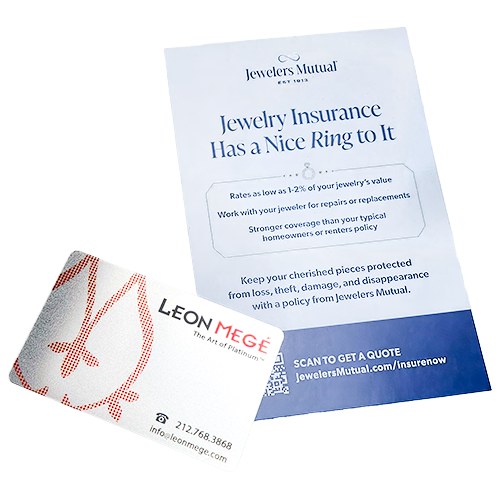
The cost of jewelry insurance depends mainly on the ring’s insured value and the insurance company’s underwriting criteria. Premiums vary based on factors such as location, deductible amount, coverage limits, claims history, and the nature of the jewelry being insured. As a general guideline, specialized jewelry insurance often costs about 1% to 2% of the insured value per year. However, actual premiums may be higher or lower depending on the insurer and the policyholder’s specific circumstances.
For newly purchased jewelry, many insurers will consider the original sales invoice when evaluating a claim. Because Leon Mege pieces are individually crafted and frequently cannot be replaced with an identical item, our appraisals typically state an insurance replacement value that exceeds the original purchase price. In most cases, the stated replacement value is approximately ten percent (10%) higher than the purchase price to reflect the anticipated cost of recreating or replacing the item under future market conditions.
The replacement value stated in our appraisal is an estimate prepared for insurance purposes only. It is not a guarantee of future replacement cost, market value, resale value, or claim settlement amount. Final claim determinations are made solely by the insurance company in accordance with the terms and conditions of the applicable policy. Although Leon Mege Inc. is not affiliated with, sponsored by, or endorsed by any insurance provider, many of our clients have reported positive experiences with the companies listed below.
Filing a Jewelry Insurance Claim
If your Leon Mege jewelry is lost, stolen, damaged, or otherwise affected by a covered event, contact your insurance company as soon as possible and follow the claims procedure in your policy. Do not delay reporting a loss while waiting to obtain a replacement estimate from Leon Mege. For a claim involving theft, burglary, robbery, or another suspected crime, contact the appropriate law-enforcement agency and obtain a copy of the police report or incident number. Your insurer may require this documentation before processing the claim. For a lost item, including a loss covered under a policy’s mysterious disappearance provision, provide the insurer with a detailed description of when and where the item was last seen and the circumstances of the loss. Follow the insurer’s instructions regarding any required written statement or documentation.
For a damaged ring or other jewelry item, preserve it in its current condition whenever possible. Do not attempt repairs, alterations, cleaning, or resetting before the insurance company decides how to handle the claim. Take clear photographs of the damage and retain any broken components or loose gemstones.
The insurer may request documentation establishing the item’s identity, ownership, and value. Depending on the policy and circumstances of the claim, this may include:
- The original Leon Mege sales invoice;
- The Leon Mege in-house appraisal;
- The GIA grading report or other applicable laboratory report;
- Photographs of the jewelry;
- Proof of payment;
- A police report, where applicable;
- Photographs or other evidence documenting damage or loss; and
- Any additional documentation requested by the insurer.
Leon Mege Inc. can provide copies of available invoices, appraisals, grading reports, photographs, and other records relating to the purchase when reasonably available. Customers should maintain their own copies of all important documentation rather than relying exclusively on the jeweler to retain records.
Replacement Value
The insurance company determines insurance coverage, claim eligibility, valuation, deductibles, replacement terms, and settlement amounts under the customer’s policy. Leon Mege Inc. does not determine whether a claim is covered and cannot guarantee the amount an insurer will pay. If the insurer authorizes repair or replacement through Leon Mege, we will work with the customer and insurer to determine the appropriate course of action. Depending on the nature of the loss and the terms of the insurance policy, replacement may involve recreating the original piece, repairing the existing piece, or creating a substantially equivalent replacement. Because custom Leon Mege jewelry may be individually fabricated and may contain rare or unique gemstones, an identical replacement may not always be possible. The appropriate replacement solution will depend on the availability of materials, gemstones, craftsmanship, and the limits and requirements of the applicable insurance policy.
Customers should not authorize a third party to alter, repair, replace, or dispose of a damaged or recovered item before consulting their insurer. Doing so may interfere with the insurer’s investigation or claim requirements. Leon Mege Inc. recommends keeping the sales invoice, appraisal, laboratory reports, photographs, and other documentation in a secure location separate from the jewelry itself. Maintaining complete records before a loss occurs can substantially simplify the claims process.
Protecting More Than Monetary Value
A Leon Mege jewel is not a commodity pulled from a display case. It results from a collaborative process, exceptional craftsmanship, and countless hours of skilled labor. Every piece is created with a specific person in mind and often marks one of life’s most important milestones. No insurance policy can replace sentimental value. It cannot recreate a proposal, commemorate an anniversary, or restore the memories attached to a cherished piece of jewelry. Insurance provides the financial means to repair, replace, or recreate a treasured jewel should the unexpected occur. A custom jewel is designed to outlast trends and become a future heirloom. Proper insurance helps safeguard not only the piece’s value, but also the legacy it is meant to carry forward. It ensures a temporary setback doesn’t end an enduring story, allowing the ring and the memories it represents to continue for generations.