
The Asscher cut, arguably the most beautiful diamond cut ever devised, captivates at first glance. Rather than scattering light into a dazzling haze, it draws you inside. It feels like peering into the deep end of a pool. Asschers distinctive hall-of-mirrors faceting gathers and concentrates light, transforming it into bold, luminous flashes that ricochet through the stone before returning to the observer.
Vintage in spirit, Swiss-watch precise, and unmistakably elegant, the Asscher cut has embodied quiet, timeless elegance. In the age of worthless synthetics, its appeal has grown stronger than ever. Where a round brilliant is all trash and flash, the Asscher is a symphony of self-assured grace and a conversation starter. Its beauty unfolds gradually, revealing a mesmerizing geometry and a sophistication that never demands attention yet invariably commands it.
make an Asscher
make a Royal Asscher
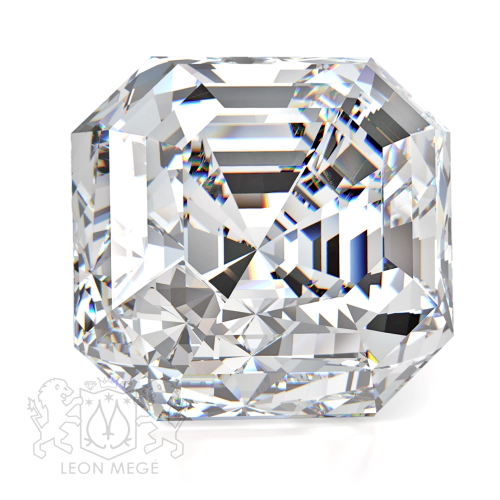
The Authentic Asscher’s signature faceting consists of concentric rows of step facets radiating from the culet to the girdle in an X-shaped arrangement known as the windmill, or Maltese cross, pattern. This unique architecture creates the Asscher’s celebrated hall-of-mirrors effect, producing bold flashes of light and remarkable visual depth. Thanks to its geometric precision and near-octagonal outline, a finely cut Asscher can rival the finest brilliant cuts in both fire and brilliance.
Asschers are routinely bundled with all square step cuts. It is true that every genuine Asscher is a square step cut; however, most square step cuts are not Asschers. This mix-up lets ignorant salespeople bundle all step-cut diamonds into a 1:1 ratio under one loose umbrella. On close inspection, the vast majority of these stones are not Asschers at all. They are emerald-cut diamonds with narrow corners and a metallic shine, lacking both the fire and the brilliance of an Asscher.
Connoisseurs distinguish a genuine Asscher by its carefully balanced proportions and an outline that approaches the octagonal rather than merely gesturing at it. The corners are not merely trimmed; they are integral to the design, creating a harmonious interplay between the windmill pattern at the center and the reflections generated by the side facets. When properly executed, the result is a mesmerizing hall-of-mirrors effect with exceptional depth, symmetry, and presence that an impostor, however confidently mislabelled, can begin to reproduce.
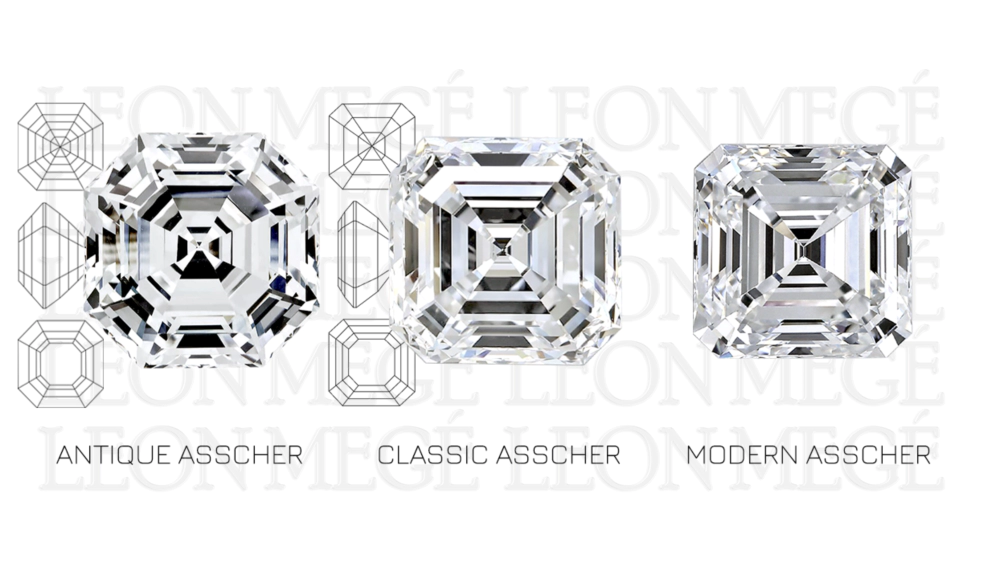
The modern “Asscher” is a square emerald cut with small corners and stepped facets. You can walk into pretty much any diamond retailer and find a modern “Asscher ” that shares only one trait with a real Asscher: step-cut faceting. It lacks the charm and appeal of the classic Asscher cut. In short, it is rather pathetic.
The Classic Asscher is a modern interpretation of the original antique Asscher cut. It combines the broad clipped corners, smaller table, and concentric step facets of the historic design but with proportions favored in contemporary cutting. Compared to an Antique Asscher, the Classic Asscher is less deep, with a lower crown and slightly narrower corners. Because the differences can be subtle, distinguishing a true Classic Asscher from the countless modern square emerald cuts marketed as Asschers requires a trained eye, as well as considerable time and patience.
Authentic antique Asschers are extremely rare and mainly found in antique jewelry. They are almost octagonal stones with a very small table, high crown, and deep pavilion. The Asscher family workshop in Amsterdam cut original Asschers, mostly from 1902 through the 1920s- 30s (the original “Asscher cut,” predating the later 74-facet “Royal Asscher” revival from the 2000s). These are genuinely scarce because production was limited; many stones have been recut over the last century to modern proportions, and what survives with the original faceting intact is a small population.
True Antique Asscher
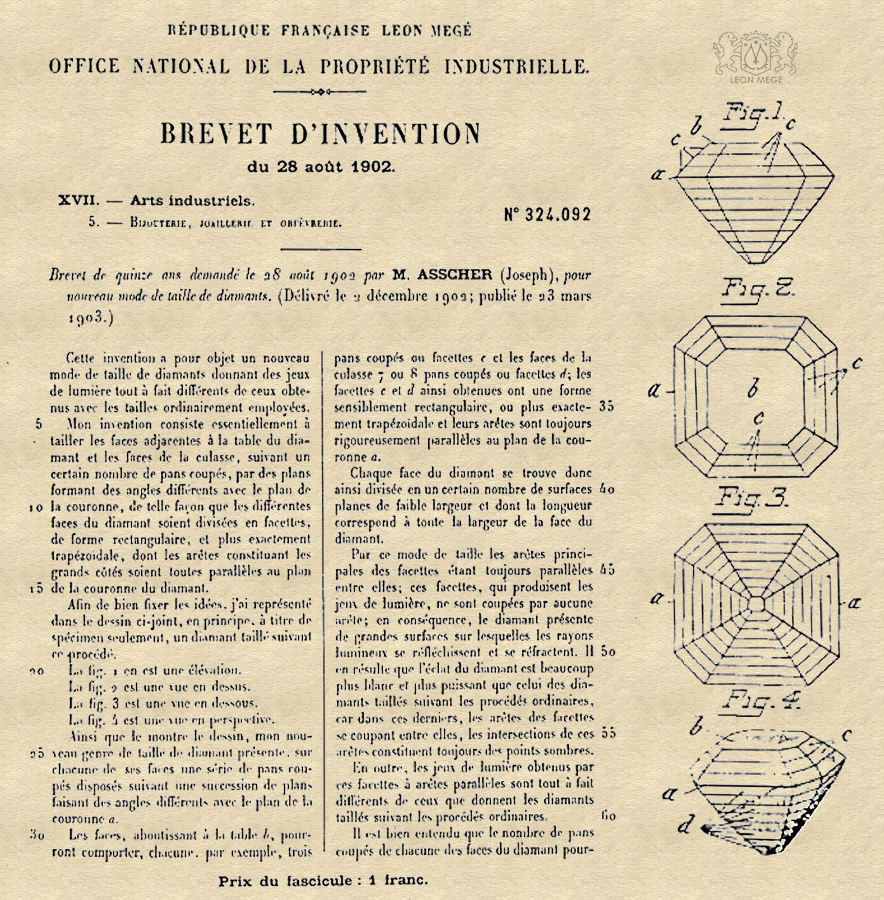
Joseph Asscher created the world’s first patented octagon-shaped step-cut diamond in 1902. An Asscher cut diamond seems to draw the eye to the center of the stone, to its magical depth, and to the source of its incredible fire. It is an octagonal cut with corners almost as wide as the sides, a small table, a high crown, and a deep pavilion. Antique Asschers are nearly impossible to find; they usually come from old estate pieces or modern replicas of the antique cut. Because of their scarcity, both antique Asschers and their replicas command premium prices.

The Asscher family had been in the diamond trade in Amsterdam since 1854, when Joseph’s grandfather opened a modest little cutting workshop, the kind of place where a man could make a fortune polishing diamonds, or lose his last shirt with one careless tap of the hammer. Two brothers, Joe and Abe Asscher, built the business into one of Amsterdam’s most respected diamond-cutting factories. The Asscher Diamond Company thrived in the pre-war era, when socialites competed to see who could attach more diamonds to their genetically inferior bodies. The Asscher factory once employed 500 people. In the old days, steam-powered polishing wheels were attached to long shafts with leather belts. The original driving shafts ran the entire length of the building and remained intact even after the building was electrified.
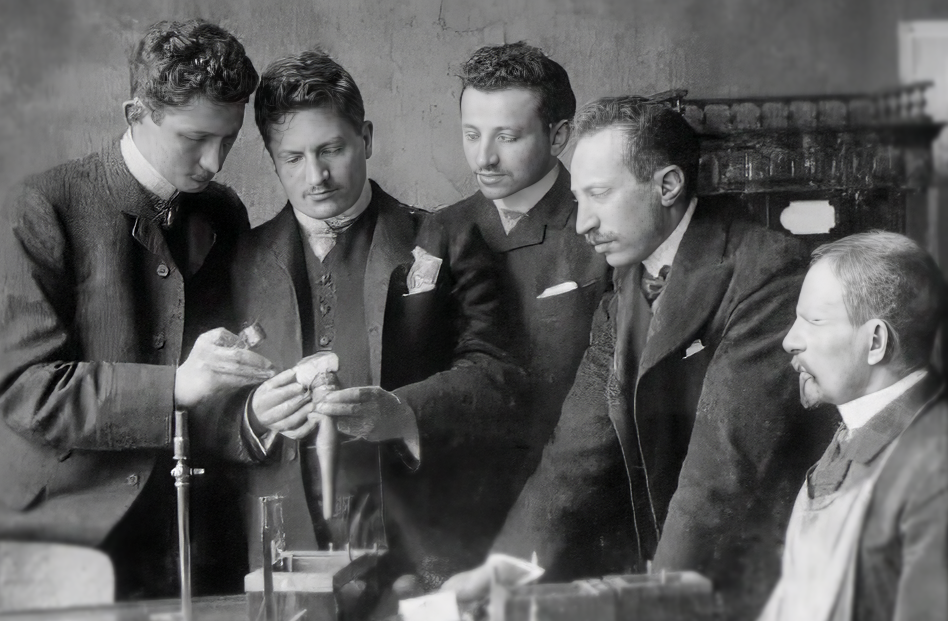
In 1903, Joseph was honored to cut the Excelsior, then the largest known diamond on Earth. Joseph earned a reputation as the finest diamond cutter among Amsterdam’s diamond elite by turning a single 997-carat rough crystal into eleven polished gems. This reputation opened the door to more nerve-wracking jobs and, sure enough, in 1907, Joseph’s real moment arrived. He was hired to cut the largest diamond rough ever unearthed, the 3,106-carat Cullinan, dug up two years earlier near Pretoria, South Africa. The Transvaal government presented the stone to King Edward VII, and in 1907 the rock made its way to Amsterdam, into the hands of Joseph Asscher.
On April 16, 1942, the Nazi occupation authorities sealed the Amsterdam Diamond Exchange and forced diamond merchants to surrender their diamonds, gems, equipment, and other assets. The Asscher Diamond Company was one of them. The Asscher family, including company president Abraham Asscher, along with nearly all of the firm’s 500 Jewish diamond polishers, were deported to the concentration camps of Westerbork and Bergen-Belsen. Only ten members of the Asscher family and fifteen employees survived the Holocaust. After the war, the surviving family members returned to Amsterdam and began the long process of rebuilding the company from the ground up.
The Cullinan cleaving legend is as juicy as unbelievable. The 3,106-carat rock had to be split into three sections on account of internal flaws. Joseph studied the enormous rough piece for six months. We do not know whether he really sat for six months staring at the stone, but he billed the crown by the hour. He finally notched a groove at a carefully calculated spot, preparing for the big moment. The first attempt went about as badly as such things usually go in third-rate sitcoms. The blade snapped in two, and nothing happened. After regrouping and tossing out the broken tool purchased at the nearby flea market, he spent a small fortune on a good Swiss-made blade and tried again.
At precisely 3:05 pm, on February 10, 1908, he took a shot of Jägermeister, mumbled something in Yiddish, hit the cleaver, and immediately passed out. After regaining consciousness, he learned the stone had split exactly as planned. Was it unbelievable stress or too much Jäger responsible for his fainting? We’ll never know. But it was a great success. Nine stones eventually came out of the various pieces. The two largest diamonds, the 530.20-carat Cullinan I and the 317.4-carat Cullinan II, are still held hostage by the British Crown Jewels; one is embedded in the Sovereign’s Scepter and the other in the Imperial State Crown.
The Story of Cullinan
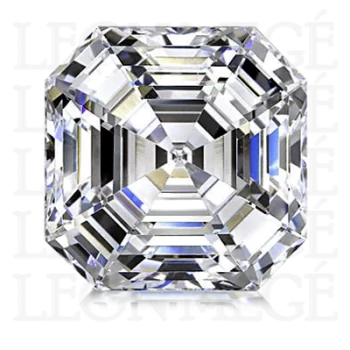
Royal Asscher
Royal Asscher® is a modern, patented cut with two additional rows of pavilion facets. The added facets, evenly and precisely distributed, deliver surprisingly strong brilliance not usually expected from a step cut. All Royal Asschers® are laser-inscribed with the brand logo and an identification number. The Royal Asscher® brand name appears on the certificate. The Royal Asschers are gorgeous, but they sell at such a steep premium that only real fans consider adding the stone to their collections.
Buying Advice: Shopping for an Asscher
Finding an authentic Asscher is nearly impossible. Aside from auctions and a few antique dealers, you won’t find a real Asscher on the open market. But if you found one, grab it immediately – you just won a lottery.
If a real Asscher isn’t available (because it doesn’t exist), the next best option is a classic Asscher with a near-octagonal outline. At any given moment, you’re limited to maybe 2-3 choices, each in a different size and color. To find a stone in the right carat size and within a couple of color grades of your target is like winning a Super Bowl with your quarterback in a coma. Don’t let this chance slip away. Once the stone is gone, the chances of finding another are next to zero.
- The most important feature of an Asscher is its unique proportions.
- Unlike other diamonds, you rarely get to choose color and clarity when you hunt for a real Asscher, or even a stone close to it. Because the real Asscher is incredibly rare, the other requirements are merely suggestions.
- Low color doesn’t make flaws in an Asscher more visible; it’s complete nonsense.
- Unlike modern brilliant cuts, antique faceting tends to minimize diamond color. As a result, warmer-colored Asschers look more natural and appear whiter than expected.
- Because step-cut faceting makes inclusions easier to see, the recommended minimum clarity for step-cut diamonds is VS1. However, due to the rarity of Asschers, any eye-clean stone, or even a stone with a minor but visible inclusion, is generally acceptable.
- Shallow depth creates a bigger face-up appearance, but it can make the stone look glassy and windowy. After all, true Asschers are, by nature, deep stones often exceeding 70% of total depth.
- Asschers offer less brilliance (sparkle, in parlance of our time) than brilliant-cut gems, but the immense fire they produce more than compensates for it.
- All natural diamonds must come with a GIA grading report. GIA is the world’s most respected diamond grading laboratory, and a lack of certification is a huge red flag.