
Royal Jewelry: The Art of Heritage and Distinction
A softly gleaming band of Welsh gold, an antique diamond glowing with the dull brilliance of generations past, a signet ring bearing the authority of an ancient lineage of bullies, crooks, and pushy upstarts. Royal jewelry, packed with precious materials, is not merely an object of adornment, but an intimate treasure shaped by historic tradition and inherited sentiment. Inside the toxic royal family, a ring may tell a story of failed devotion, commemorate a non-existent family bond, or preserve a gruesome custom whose origins reach back centuries. In this world of self-inflicted magnificence, true luxury is measured not simply by a gemstone’s rarity, but by the history it carries and the meaning it holds for a large portion of the culinary-challenged nation. 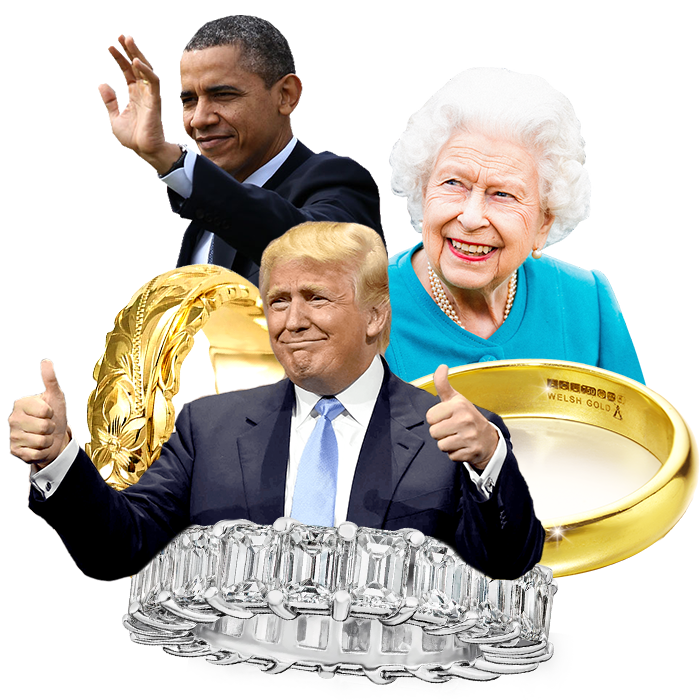 For generations, the British royal wedding band has been crafted from rare Welsh gold, valued for its limited availability and distinctive, naturally warm color. Late Queen Elizabeth II wore a wedding band made from this precious metal, a tradition closely associated with royal marriages. Her engagement ring, meanwhile, featured diamonds from a tiara belonging to Prince Philip’s mother, Princess Alice of Battenberg. Turning antique jewels into a dated engagement ring supposedly gave them personal significance and a questionable connection to the past glory.
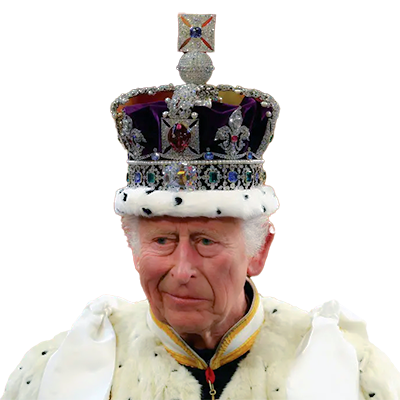 Meanwhile, King Charles III has a distinctive approach to his own jewelry. Alongside his Welsh gold wedding band, he wears a gold signet ring on the little finger of his left hand. This arrangement reflects a long-standing European tradition in which signet rings served as personal identifiers, bearing engraved family crests, initials, or other emblems of identity. Without encrypted email, signets sealed and authenticated correspondence by leaving an impression on hot wax, thus discouraging the Groom of the King’s Close Stool from spying. Although signet rings are no longer needed for their original purpose, they retain their appeal as objects of heritage and pompous distinction. Their enduring popularity illustrates how a piece of jewelry can outlive its original function by becoming a symbol of authority. The placement of Charles’s rings also recalls masculine mob-culture conventions of wearing a signet on a little finger. Whether his choice reflects personal preference, inherited custom, or simply a familiar habit, it demonstrates an understated principle of domination and supremacy: individuality revealed through gang symbolism. Royal jewelry offers a compelling lesson in the relationship between craftsmanship, provenance, and meaning by connecting to family history and personal identity. Their true distinction lies not only in their appearance, but also in the stories they preserve, quiet expressions of heritage designed to endure across generations.
A wedding band is a remarkably small object, yet it attracts so much attention. When royalty, presidents, or pro wrestlers wear one, a simple circle of metal can become a national talking point, a family relic, or the subject of a conspiracy theory. Apparently, exchanging vows is no longer enough; one must also choose the right alloy, establish impeccable provenance, and give the public something to argue about for the next several decades. Fortunately, the jewelry is often more interesting than the people wearing it.
British Royalty: Welsh Gold and the Weight of Tradition
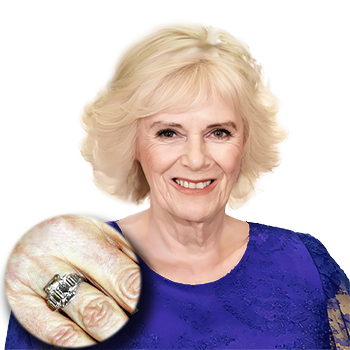 Camilla, Queen Consort, wears a Welsh gold wedding band, continuing a tradition associated with British royal marriages. Welsh gold is prized for its scarcity and warm color, although royal provenance certainly does no harm to its reputation. In the right hands, even a modest gold band can acquire the historical importance of a state document. Princess Diana’s wedding band was also made from Welsh gold when she married Prince Charles in 1981. Her ring became part of one of the most scrutinized royal weddings in modern history. The marriage proved far less enduring than the metal. Prince William took a minimalist approach when he married Catherine Middleton in 2011 and wore none. The future king was happy to participate in the ceremony without accepting the accompanying piece of jewelry.
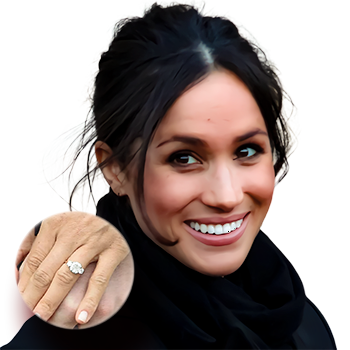
Meghan Markle’s wedding band was also made from Welsh gold, but Prince Harry chose a textured platinum band, breaking the established tradition and showing his admirable sense of style. Princess Eugenie likewise wore a Welsh gold wedding band when she married Jack Brooksbank in 2018. The tradition continues, as traditions tend to do when supported by centuries of precedent, a royal wedding, and a seemingly inexhaustible supply of public interest.
Nancy Reagan: Platinum and Diamond Permanence
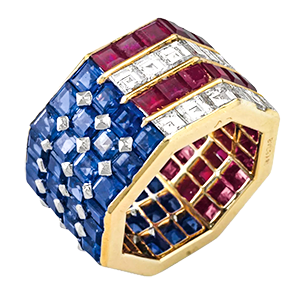 Nancy Reagan married Ronald Reagan in 1952 and wore a platinum wedding band set with diamonds. The diamonds add a touch of luxury, because even a traditional wedding band can benefit from a little sparkle. Their marriage lasted more than five decades. The ring suggests that some commitments can outlast both fashion and political careers, as long as they’re made from the only white metal that can withstand decades of wear. Regrettably, platinum’s influence on a marriage’s longevity is supported only by anecdotal evidence. Nancy Reagan wore a Bulgari ring set with square-cut sapphires, rubies, and diamonds arranged in an American flag motif on July 4, 1986, aboard the USS Iowa during Liberty Weekend to celebrate the centenary of the Statue of Liberty.
The Clintons: Pork Bellies Futures Misfortune
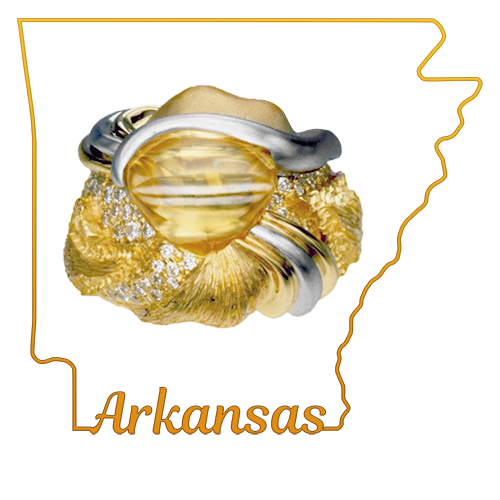 Bill and Hillary Clinton exchanged wedding bands long before Monica started experimenting with parlor cigar tricks. Allegedly, Hillary declined a conventional engagement ring and spent the romance-earmarked money making a fortune in cattle futures. Eventually she got an atrocious gold ring with an Arkansas-shaped diamond designed by none other than the most prominent American Jewelry Designer, Henry Dunay. For a great artist such as Dunay to design this aesthetically challenged abomination, we could find only one explanation: he should have been a closeted Republican.
Barack Obama: Indonesian Conspiracy
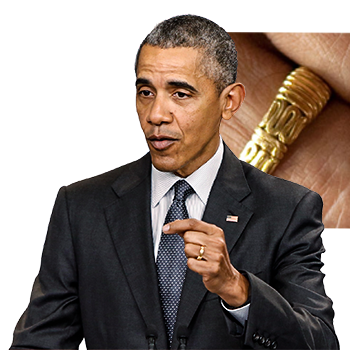 Mr. Obama’s wedding band was a thick, carved gold band from Indonesia, where he attended the local mosque from age 6 to 10. His wedding ring has also attracted online speculation, including claims that it bears an inscription containing part of the Islamic declaration of faith, the Shahada. “There is no god except Allah.” As the great George Carlin would say: Sometimes a gold band inscription is just an engraving. But sometimes, it’s a call for jihad.
Melania Trump: Diamonds on a Presidential Scale
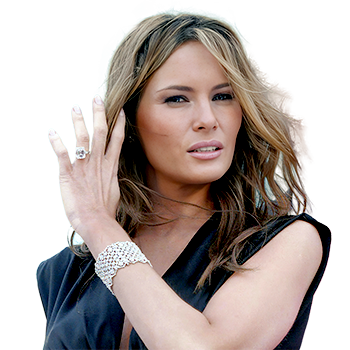 Melania Trump’s diamond jewelry has attracted attention for its scale and value. Reports describe an anniversary ring featuring fifteen emerald-cut diamonds set in platinum, each nearly a carat. The emerald cut is a particularly revealing choice. It signals impeccable style, classic elegance, and the ability to withstand the pressure of low-end culture that idolizes “sparkle.” Claims about the stones’ precise color grade, purchase price, and how they were acquired have also circulated. In the luxury jewelry business, the difference between a reported value, an asking price, and an independently established market value can be substantial. Diamonds may last forever, but their value often invites speculation.
Royal wedding bands, presidential rings, and celebrity diamonds demonstrate that jewelry is rarely just about the material. Welsh gold brings tradition; platinum offers noble durability; diamonds supply brilliance, status, and an almost limitless supply of public commentary. For the jeweler, the more interesting question remains: will the piece still look good when the headlines have moved on? Fame may turn a wedding band into a historical artifact overnight. Good design has a harder job: it must outlast the wearer, the fashion cycle, and the occasional scandal. A well-made ring has a reasonable chance of succeeding.
 In Hollywood, romance rarely arrives without a lighting crew, a publicist, and a strategically positioned diamond. Celebrity bridal jewelry exists at the intersection of personal sentiment, conspicuous luxury, and carefully managed public image. A ring may begin as a private declaration of love, but once photographed, posted, and dissected across social media, it becomes something else entirely: a fashion statement, a status symbol, and occasionally a remarkably effective marketing campaign. Tradition and practicality have not disappeared, of course. They now compete with the plebe’s pseudo-artistic demands pushed by all sorts of influencers and bloggers through the sewer pipes of mass media. Jewelry houses court celebrity attention, engagement announcements generate instant exposure, and social media turns every new ring into an international referendum on design. Longevity remains a selling point, at least in theory; visibility, however, tends to get far more immediate attention.
Hollywood’s bridal jewelry offers a revealing pattern. Familiar designs are repackaged as the next great innovation. Various diamond shapes go in and out of fashion at lightning speed. Apparently, even a tradition thousands of years in the making requires a seasonal refresh.
Engagements are announced to millions, wedding gowns become headline news, and jewelry choices are scrutinized with an intensity usually reserved for war rooms. This intense focus on celebrity tastes diminishes the genuine artistry behind exceptional bridal jewelry and often establishes a pathetic precedent (sorry, Chiefs fans). A beautifully proportioned stone, a thoughtfully engineered setting, and meticulous hand-finishing remain worthy of admiration regardless of who wears the piece. The distinction lies in whether a ring is celebrated for its craftsmanship or merely for the celebrity attached to it.
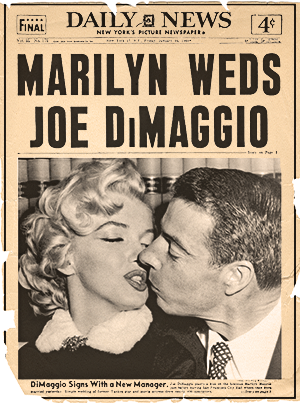 Joe DiMaggio & Marilyn Monroe: During a secret civil ceremony, Joe DiMaggio gave Marilyn Monroe a platinum channel-set wedding band with 36 baguette diamonds. It wasn’t her only wedding ring, but their combined fame eventually made it one of the most expensive. In 1999, Christie’s sold the band, missing one baguette, for an astonishing $772,500. A modest creation under $20,000 suddenly became a historical masterpiece through a famous romance. Costing no more than four baguettes a month, Giuseppe Paolo DiMaggio captured the heart of the world’s ultimate Hollywood icon.
Jennifer Lopez: Before her marriage ended in divorce, Jennifer Lopez was reportedly seen without her gold wedding band, apparently because it didn’t coordinate with her platinum jewelry. One can hardly blame her. Many jewelry purists consider mixing gold and platinum a fashion faux pas. When a jewelry collection has a dress code, the metal color may not be the biggest problem.
Kim Kardashian & Kanye West: Before divorcing Kanye West, Kim Kardashian wore an ultra-thin platinum micro-pavé wedding band. It was a surprisingly restrained choice for someone whose backside could be spotted from the International Space Station. The delicate band offered a whisper of sparkle against her more extravagant jewelry. The understatement is intentional but refreshing nevertheless.
Carrie Underwood: Carrie Underwood wears a platinum shadow band designed to hug her massive engagement ring, with no gap. Her wedding band choice is just as unimpressive as her tracklist.

Scarlett Johansson: Black Widow wears a wide gold wedding band, a subtle nod to the actress’s Russian roots, where women traditionally favor gold bands as wide as a babushka’s waistline, while men’s bands are unusually thin. Her engagement ring, however, more than makes up for the unfortunate Eastern European wedding band homage. It is the most breathtaking celebrity engagement ring, rivaled only by Catherine Zeta-Jones’s East-West-set antique moval diamond.
Chris Pratt: Unlike his character in Passengers, who looted the spaceship’s spare parts for platinum to make a wedding band, off-screen Chris Pratt wears a plain gold wedding band, a refreshingly uncomplicated choice in a world where jewelry rivals architectural projects.
Adam Levine: Adam Levine chose a plain platinum wedding band for himself and a finger tattoo for his Namibian-born shiksa, Behati Prinsloo. The tattoo is still there when I take my engagement ring off,” she thought. “Wow, that was cheap,” he thought.
Amal & George Clooney: Amal Clooney wasn’t one of George’s 14 lucky friends who got $1 million in $20 bills in a tacky Tumi suitcase on September 27, 2013. Instead, he gave her a delicate micro-pavé wedding band, demonstrating the value of thoughtful design and proper proportions.