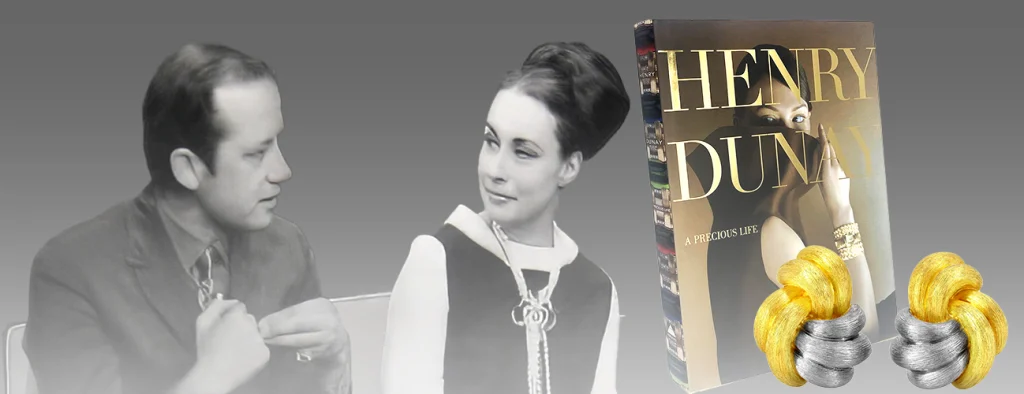
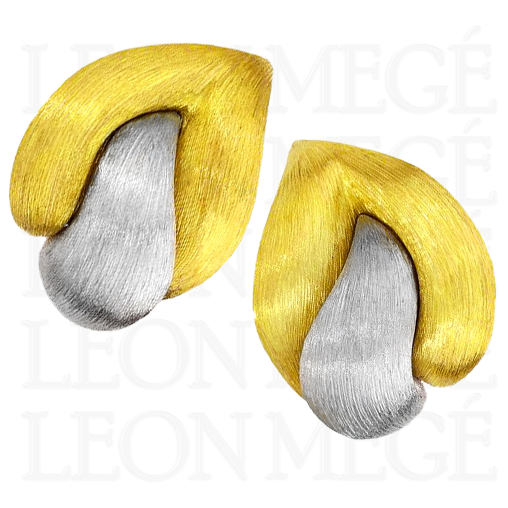
The finish itself, which Dunay named Sabi, appeared deceptively simple: a surface of finely etched lines that required extraordinary patience and skill to execute. It was often carried out by a master craftsman from South America who specialized in the technique. As Dunay’s reputation grew in Japan, the popularity of his Sabi pieces increased significantly, driving strong demand.
A key moment in his career came through his collaboration with Stanley Marcus of Neiman Marcus. Together, they helped introduce branded designer jewelry to the renowned retail chain, reinforcing Dunay’s standing as one of America’s most prolific and innovative jewelry designers of his time. Soon, his creations were carried by some of the most prestigious jewelry retailers in the world, attracting an illustrious clientele. Celebrated figures such as Elizabeth Taylor, Nancy Reagan, and Princess Diana wore his designs at high-profile public appearances. His jewelry was seen by millions, yet owned by only a lucky few.
Dunay’s workshop was equally remarkable. It fostered an atmosphere of creativity and discipline, where talented craftspeople refined their skills. Those who passed through his studio absorbed not only his distinctive aesthetic but also a philosophy rooted in professionalism and an uncompromising commitment to beauty.
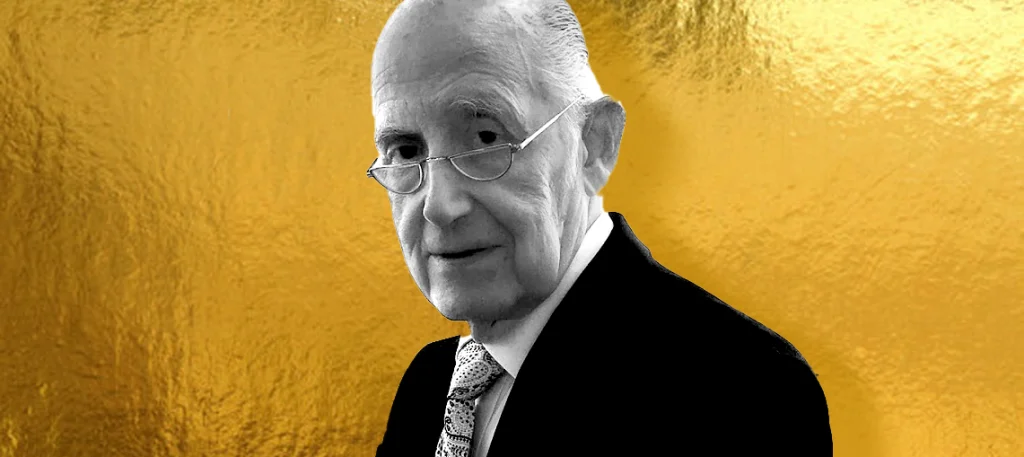
Among them was Leon Mege, who joined Dunay’s workshop in 1988. Dunay quickly recognized his exceptional skills and intuitive sense for proportions and curvatures, qualities that would later define Mege’s own distinguished career.
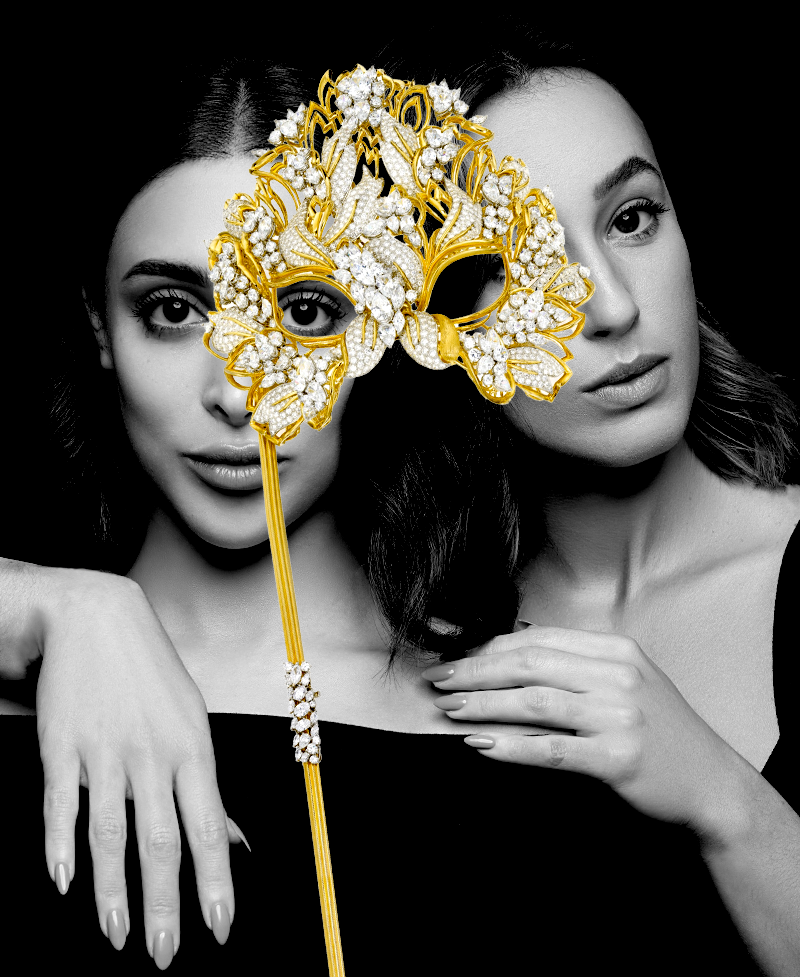 Henry Dunay’s collaboration with Elizabeth Taylor resulted in one of the most extraordinary creations in modern jewelry history: the “Lachrymosa” diamond mask. The piece was set with more than 130 carats of fancy-shaped diamonds, generously loaned by William Goldberg. Taylor wore the mask in a 1993 publicity photo shoot for the American Foundation for AIDS Research, bringing it worldwide attention.
When the mask later failed to sell at Christie’s, Goldberg requested the return of the diamonds. What followed was a stark and unfortunate end to the piece.
The removal of the stones was carried out by the infamous jeweler Werner Lippe. Around that same time, Leon Mege had just begun working in Lippe’s workshop and witnessed the wrecking of Dunay’s masterpiece firsthand. Lippe gouged diamonds out with complete disregard for the delicate craftsmanship and artistic value of the original setting. By the end, parts of the intricate gold structure had been reduced to a tangle of clipped prongs and small fragments from chipped stones scattered across the bench.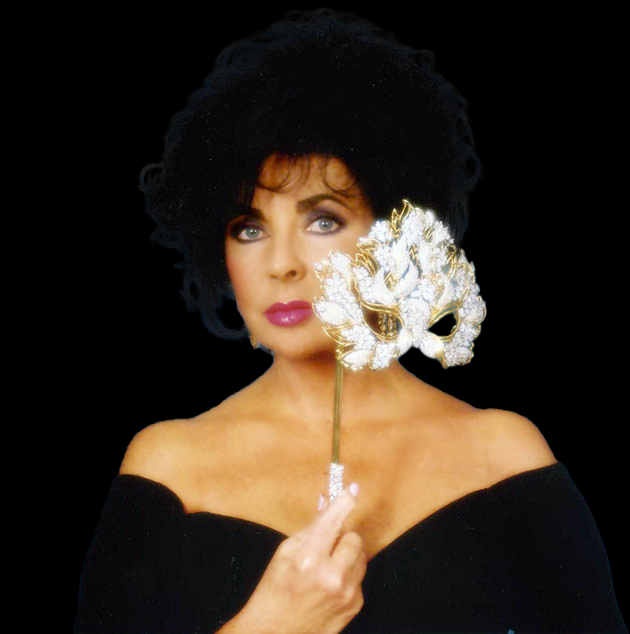
The contrast was striking: it had taken Henry Dunay eight months to create the mask, yet the dismantling of the piece was completed in little more than an hour, bringing the remarkable work of art to an abrupt end. Years later, following Henry Dunay’s bankruptcy, the rights to his brand passed to new owners who attempted to restore the “Lachrymosa” mask. Their approach, however, was an insult to the original vision: the missing diamonds were replaced with inexpensive simulants, altering the integrity of the piece. In 2020, this altered version appeared at the Sotheby’s Important Jewels auction 2020, but it apparently did not find a buyer.
In 1988, Dunay co-founded the American Jewelry Design Council and served as its first president. The organization was created to promote and elevate American jewelry design on the global stage.
Over the course of his career, Dunay received more than fifty design awards, including multiple honors from the AGTA Spectrum Awards. In both 1999 and 2000, Robb Report named him the Best Jewelry Designer in the world. His work was widely exhibited in museums and regularly appeared at major auctions. Like many long careers, however, his later years reflected a shift in creativity. Some critics point to designs such as the ring created for Bill Clinton’s inauguration, 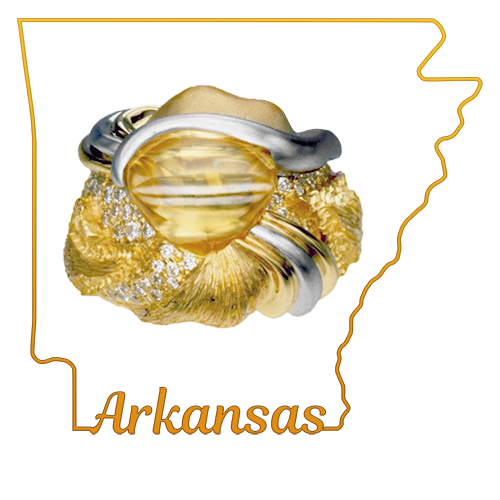 featuring an uncut Arkansas diamond, as evidence that his once-groundbreaking vision had begun to lose its earlier artistry.
Henry Dunay’s brand came to a sudden and devastating end in 2008, during the global financial crisis known as the Great Recession.
In December 2009, the company’s inventory, valued at approximately $50 million, was liquidated at auction to satisfy outstanding debts. The final blow came in March 2010, when Sandawana Holdings acquired the intellectual property of the Henry Dunay brand at a bankruptcy auction for roughly $210,000. The sale included not only designs, molds, tools, and the company’s website, but also the rights to his own name.
Dunay made a brief return with a new venture, H.D.D. Inc., focusing on custom commissions and one-of-a-kind, handcrafted pieces. Though short-lived, it reflected his enduring commitment to artistry and craftsmanship.
Henry Dunay passed away on November 10, 2023, at the age of 88.
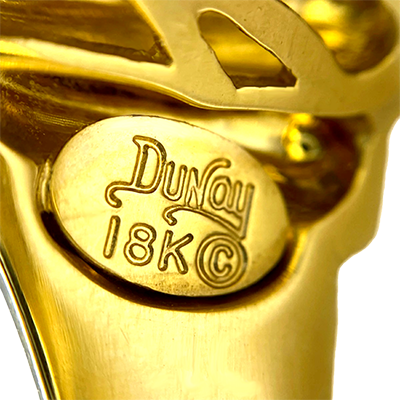 Among those shaped by his influence was Leon Mege, who spent formative years working in Dunay’s atelier before going on to become one of the most respected craftsmen of his generation. Known for his exceptional hand fabrication, mastery of platinum, and precision, Mege has often credited his time in Dunay’s workshop as pivotal in defining his philosophy of art in jewelry.
The culture Dunay cultivated – one of uncompromising quality, rigorous craftsmanship, and a belief that jewelry must possess not only surface beauty but an inner life- left a lasting impression on those who worked with or for him. It is no coincidence that many jewelers who passed through his New York studio went on to careers marked by independence and technical mastery. Henry Dunay did not simply create remarkable jewelry; he fostered a legacy of excellence that continues to resonate across generations.