
Hypoallergenic Jewelry – Myth vs. Reality
Ring Rash
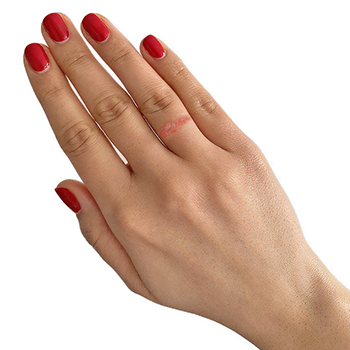 Ring rash – red, itchy, swollen, or scaly skin beneath a band is rarely caused by fine jewelry itself. More often, it is a benign form of contact dermatitis triggered by soap residue, sweat, and moisture trapped between the ring and the finger. It is an ideal breeding ground for superficial bacterial or fungal irritation. That said, allergic reactions to trace metals, particularly nickel found in base alloys or low-karat gold, can cause genuine contact allergies with prolonged wear.
Managing ring rash requires a simple routine change: remove your rings before washing your hands, and afterward let your skin dry completely. Once your hands are thoroughly dry, apply a hypoallergenic, ceramide-infused moisturizer to shield the skin before slipping your beautiful Leon Mege ring back on.
What Metals Are Hypoallergenic?
A wedding band is one of the few pieces of jewelry you are expected to wear practically around the clock. Unlike an engagement ring, which you may occasionally remove for safekeeping, a wedding band is meant to be part of your daily life. Choosing a metal that does not irritate your skin is a matter of comfort and chemistry. The term hypoallergenic describes materials that are less likely to cause an allergic reaction. No metal is guaranteed to be completely allergy-proof, but some are considerably safer choices for people with sensitive skin.
Before blaming the jewelry, however, consider what happens underneath it. Soap residue, trapped moisture, perspiration, hand lotions, and household chemicals can accumulate and cause irritation that has nothing to do with metal allergies. Cleaning your jewelry regularly and drying both the ring and your finger thoroughly before putting it back on will prevent moisture from becoming a major irritant. If the irritation persists, a dermatologist, not a jeweler, can determine whether you have a genuine metal allergy or just poor handwashing skills.
Metals That Can Cause Allergic Reactions
Nickel is the most common culprit in jewelry-related metal allergies. Cobalt, zinc, copper, and other alloying metals can also cause contact dermatitis, although reactions vary considerably between individuals. Nickel content of white gold deserves particular attention because it can cause persistent and sometimes severe allergic reactions. European regulations restrict the amount of nickel that jewelry may release during prolonged skin contact. Unfortunately, nickel-containing white gold alloys remain common in the US, where unsupervised and unregulated jewelry manufacturing is the norm. A rhodium coating may initially provide a protective barrier, but once it wears off, the exposed nickel alloy comes into contact with the skin.
Leon Megé never uses nickel-bearing alloys in our jewelry. We pay close attention to the composition of our precious-metal alloys because we don’t want our clients to get sick. It would be bad for business. If you have a known metal allergy, we can discuss the alloy’s composition and help you determine whether it’s safe to wear.
Platinum: The First Choice for Sensitive Skin
Platinum is the best choice for people with metal sensitivities. Its exceptional corrosion resistance makes it ideal for jewelry designed for continuous wear, and its naturally white color doesn’t require rhodium plating. Fine platinum jewelry is typically made from a 95% platinum alloy. The other 5% is Ruthenium – a rare metal with zero chance of irritating skin. Platinum is also widely used in medical and dental applications because of its favorable biocompatibility. Allergic reactions to platinum jewelry are uncommon, although I was told they are not impossible. If you have one, please stop wearing your platinum ring immediately and have it resized to fit over a rubber or silicone finger sleeve.
Palladium: Platinum’s Lighter Relative
Palladium belongs to the same precious-metal family as platinum and Ruthenium and shares platinum’s naturally white appearance. It is considerably lighter, making it attractive to people who are bothered by platinum weight. Palladium is also used in medical applications and is generally well tolerated, although individual sensitivities are possible. Some palladium alloys can cause allergic reactions, so the precise alloy composition matters. A hypoallergenic palladium alloy contains 95% pure palladium blended with 5% ruthenium. Both platinum and palladium can be used in sophisticated jewelry designs, but unlike lightweight palladium, platinum is the better option for traditional bridal jewelry.
Yellow Gold: Generally Safe, but Check the Alloy
Eighteen-karat yellow gold is a great choice for people with sensitive skin because of its relatively high purity. It contains 75% pure gold, with the remaining 25% made up of silver, copper, and sometimes zinc, which give the gold the necessary strength and color. These metals are generally well tolerated, though individual allergies are still possible. The key consideration is not just gold purity, but also the identity of the metals used in the remaining alloy.
White Gold: Not All Alloys Are Created Equal
White gold deserves special attention. Some white gold alloys contain nickel to bleach the yellow color and increase gold’s hardness. But nickel’s toxicity is well-established. The rhodium plating typically applied to gold’s surface is only a temporary barrier. That’s why nickel white gold alloys are banned in Europe, and only nickel-free Palladium white gold alloys are allowed. At Leon Megé, we do not use white gold alloys containing nickel.
Alternative Metals: Cobalt, Stainless Steel, and Zirconium
A wedding band does not need to be made from gold or platinum – the traditional precious metals. Alternative materials are available for those seeking affordability or avoiding jewelry-related allergies. Cobalt chrome is a hard, scratch-resistant, silvery-white alloy used in some jewelry and medical applications. Its strength makes it attractive for lumberjacks and sumo wrestlers. However, cobalt is a recognized contact allergen, so it shouldn’t automatically be considered hypoallergenic. People with known cobalt sensitivity should think twice. Stainless steel is another affordable option. Some surgical-grade stainless steels are generally well tolerated; others contain nickel. The fact that stainless steel originated in a laboratory rather than chipped off a meteorite does not make it automatically safe. The exact composition matters. Zirconium is a lightweight metal that can be treated to produce a distinctive dark, almost black surface. It is used in contemporary wedding bands and is generally well tolerated. However, look out for those nasty surface treatments.
Which Metal Should You Choose?
Before anything else, consider whether the problem might be psychosomatic, which is more common than you’d think. For someone with sensitive skin, platinum is the best recommendation for traditional bridal jewelry. Properly formulated nickel-free gold alloys are also possibilities. The key is knowing exactly what you are allergic to. Lastly, terms such as hypoallergenic, medical grade, food grade, or surgical grade are not substitutes for knowing the actual alloy composition. At Leon Megé, we believe an engagement ring or a wedding band should be comfortable enough to forget you are wearing it. They should last a lifetime, and not remind you of their presence through an unpleasant skin rash. Beautiful jewelry should never require a tolerance test.