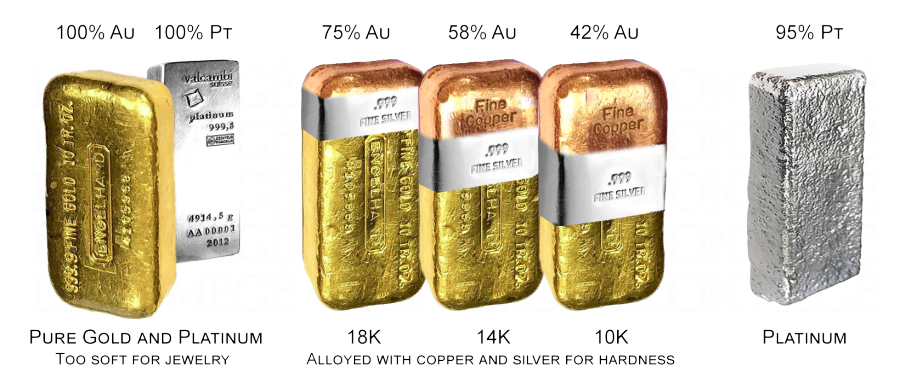
Platinum is a precious metal known for its resilience, purity, and high style. At Leon Megé Jewelers, we use a superior blend of 95% Platinum and 5% Ruthenium – two rare, noble metals. This combination is the purest precious-metal alloy in existence. Beyond corrosion resistance, platinum’s luminosity and shine give it its special status.
Rolex-Grade Platinum
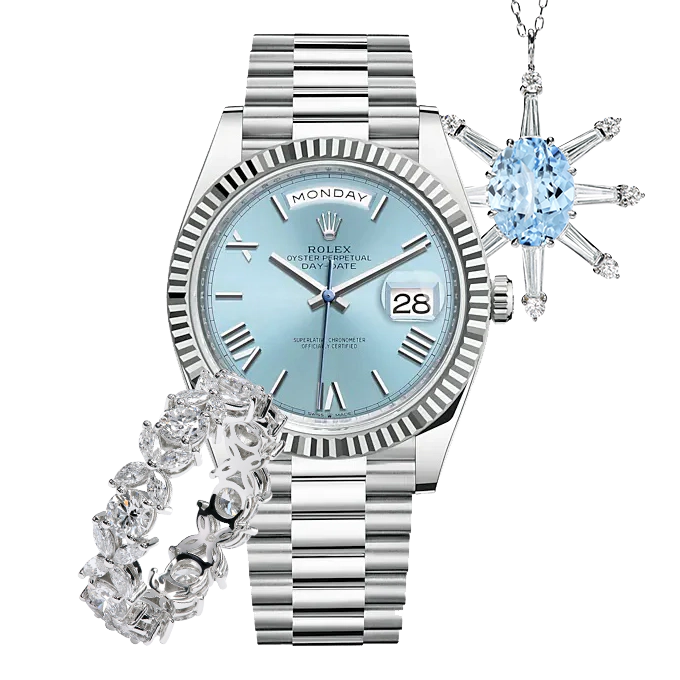
At Leon Mege, we use the same platinum alloy found in the finest watches, including Rolex, a brand renowned for exceptional engineering. Rolex makes extremely desirable and precise timepieces that are built to withstand a significant amount of wear and tear because they use the strongest alloy designed to overcome platinum’s relative softness. Rolex uses 950 platinum, an alloy of 95% pure platinum and 5% Ruthenium. This alloy makes the watch more robust while maintaining its legendary shine and brilliance. Rolex uses it for the Day-Date and Pearlmaster, pairing it exclusively with ice blue dials on the most prestigious watches in the Oyster collection.
 Traditionally quoted in troy ounces, the gold spot price is the wholesale interbank price for a 400-ounce gold bar, delivered in two business days. It is the benchmark price on which all retail gold purchases are based. Gold and platinum prices flipped over a decade ago, and gold remains significantly more expensive than platinum. The same amount of money currently buys twice as much platinum as gold. Platinum’s low price is a fantastic buying opportunity considering that platinum is 30 times more scarce than gold. The gold market is the largest market by value. It trades internationally 24 hours a day, Monday to Friday. Gold prices constantly change and reflect the equilibrium between supply and demand from central banks, the jewelry sector, industrial use, and investors. Most trading in gold is carried out in the futures markets on the futures exchanges.
Gold is increasingly difficult to mine as all the easy-to-extract gold has already been mined. Extracting it from the earth is expensive and energy- and labor-intensive. The political stability of gold-producing countries is also a major factor in the supply of gold to the market. Gold jewelry remains popular in the Western world due to its beauty and status, but in many parts of the world, particularly in India and China, gold jewelry is bought as a store of wealth. Gold is a proven hedge against inflation and uncertainty; it acts as an insurance investment during times of increased risk in financial markets or political tensions.
Graceful With Age
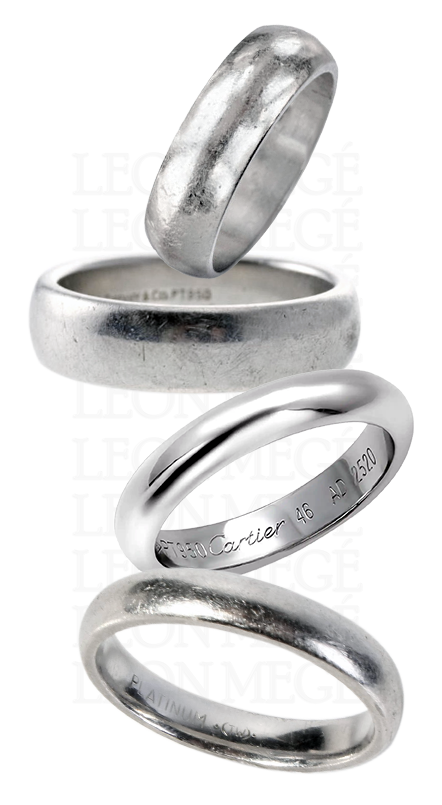 One of platinum’s most distinctive properties is how its surface responds to wear over time. Platinum is a self-burnishing metal. Its surface compresses rather than losing substantial metal. Gold, by contrast, tends to lose material through abrasion. Platinum’s surface gradually develops a dignified appearance, best described as shabby chic. With age, an older platinum ring acquires character as small dents and tiny pits accumulate into a uniform, softly textured patina, unlike battered and scratched white gold. Platinum retains its original form and substantial metal content, lasting through generations. Unlike white gold, platinum does not need rhodium plating to restore its color. Its appearance evolves naturally with use, unmistakably luxurious.
The Perfect Metal For Engagement
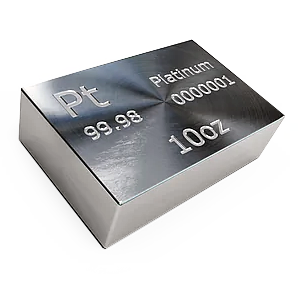 The most desirable noble metal globally, platinum is the best choice for bespoke jewelry, especially engagement rings. The Royal Society of Chemists has given it high marks for its strength, resilience, rarity, and value. Hand-forged platinum jewelry is surprisingly affordable.
Platinum jewelry has a solid feel that white gold can’t match, and it was developed as a substitute for platinum during WWII. Platinum’s cool white sheen will not corrode or tarnish, making it ideal for setting white diamonds without leaking unwanted colors. Platinum’s heft isn’t a detriment for hand-forged jewelry because skilled jewelers create light, airy pieces using specialized techniques like three-dimensional truss construction or piercing.
Leon Mege Platinum
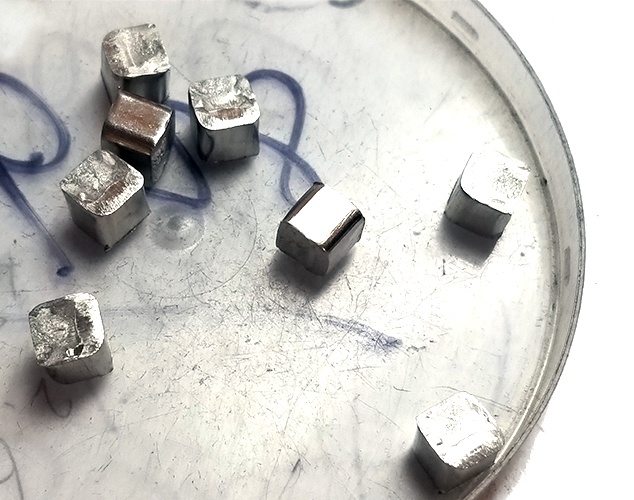 Platinum is the most malleable of all metals in its pure form, so it needs a tiny amount of ruthenium to improve its hardness and density. We use a platinum alloy of 95.5 parts pure Platinum and 4.5 parts Ruthenium, a platinum group metal. Ruthenium-platinum is the best alloy for hand forging, unlike iridium alloy, which is used mainly for casting. According to FTC guidelines, our platinum jewelry is marked with the PT950 or Platinum stamp.
Platinum is Maker-Friendly

Ask a master jeweler which metal is more agreeable to work with, platinum or white gold, and the answer will almost invariably be platinum. The distinction matters most in bespoke jewelry, where precision fabrication matters more than the convenience of mass production. Platinum’s high melting point and excellent malleability make it exceptionally well suited to hand forging and assembly. Platinum-ruthenium alloys combine these properties with increased hardness, allowing the jeweler to achieve precise geometry, crisp edges, and well-defined details. White gold’s lower melting point and easy oxidation make repeated soldering nearly impossible. Fewer soldering stages make a complex hand assembly much more difficult. Repeated soldering causes white gold solder to burn out, weakening joints and leaving noticeable surface scars. Platinum solder, by contrast, tolerates repeated heating and lets the jeweler use solder as many times as needed without negative effects.
Building a platinum ring with precisely fitted parts and intricate transitions lets the jeweler focus on his work rather than constantly fighting the material. The result is an exact construction, clean joints, well-defined edges, and wrinkle-free surfaces.
Casting and forging are two absolutely distinct processes. Casting white gold is generally easier and less expensive than casting platinum. Hand forging, however, reverses the equation. For a master, platinum is far easier and faster to work, while it is a nightmare for an unskilled jeweler.
Ethical Sourcing
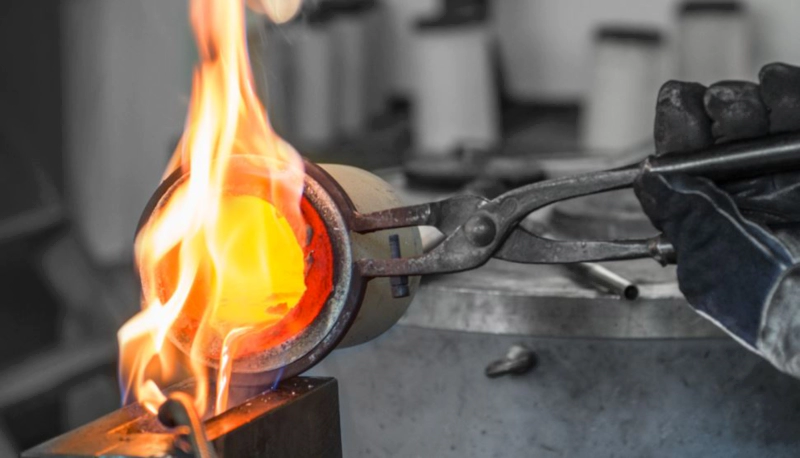 We draw on years of experience to ensure our procurement reflects the spirit of Fair Trade, supports human rights, and protects the environment. Every time you buy from us, you support the livelihoods of indigenous mining communities in a sustainable, economically just way.
Yellow Gold
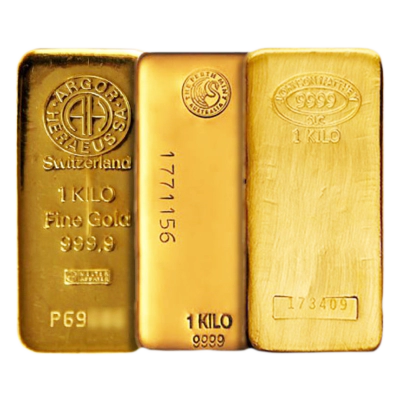 Yellow gold has long been the traditional metal of choice for jewelry because it doesn’t rust, tarnish, or corrode. All 18-karat yellow gold in our jewelry is made with 3N* alloy imported from Italy, guaranteed to have a rich, vivid yellow color. The alloy is proprietary, field-tested, will not cause skin allergies, and is guaranteed to meet strict European Nickel Release test requirements and FTC standards for jewelry metals. Leon Mege jewelry is stamped 750, Au750, or 18K, indicating 75% gold purity.
Rose Gold
Pink gold blends pure gold and copper with a very small amount of silver to soften the rich reddish color into a milder rose tone. The 18-karat pink gold contains 75 percent pure gold and 25 percent copper. “Pink gold” and “rose gold” are often used interchangeably. Rose gold is harder and more durable than yellow gold, but its high copper content makes it prone to oxidation. Vintage pieces can be restored to their original look by repolishing. The oxidation and low ductility of the pink alloy make it harder to work with, but its superior hardness lets it achieve a higher gloss when polished. Pink gold is surging in popularity as more and more people embrace its charming hint of vintage grace. Traditionally, in some Eastern European countries, pink rather than yellow is considered a natural gold color.
White gold
White gold requires periodic plating to maintain its look; it is only 75% pure compared to platinum’s 95%. Unlike platinum, which self-burnishes, white gold continuously sheds its top layer. And unlike some white gold alloys, platinum never contains nickel.
Alternative Materials Used in Jewelry
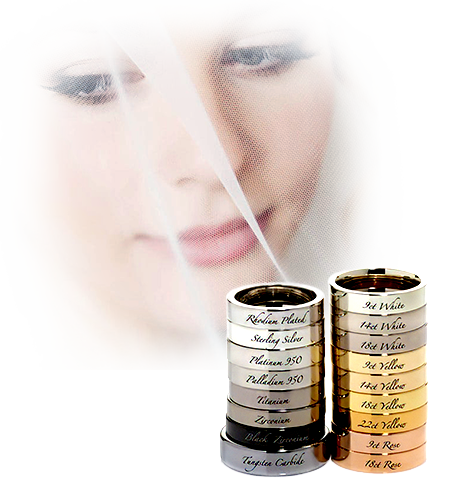 Gold, silver, and platinum aren’t your only metal options when buying a wedding band. From traditional to ultra-modern, there are plenty of materials to consider. Medical personnel can remove zirconium, titanium, and steel rings with special ring cutters. Still, it’s a major headache, so medics will not appreciate your taste in alternative metals.
Palladium is a naturally white metal, visually indistinguishable from platinum. It is one of the rarest metals on Earth. A decade ago, palladium was considered a cheap platinum substitute, costing a fraction of platinum’s price. Today, palladium is twice as expensive as platinum. Even Bitcoin millionaires will think twice before ordering a palladium band. Palladium is lighter than platinum, very durable, and hypoallergenic.
Titanium is among the strongest and lightest metals for wedding bands. Those tired of heavy platinum bands can finally breathe easy with titanium’s almost plastic-like lightness.
Stainless steel rings are strong and cheap. You can polish them to a shiny chrome finish or brush them for a pewter look. Either way, you get a shiny piece of hardware.
Damascus steel rings are made of two alternating types of stainless steel layered together to create striped patterns. Some layers are chemically darkened to add a dramatic contrast similar to zebra skin.
Meteorite iron is often incorporated into wedding bands alongside other metals, such as titanium, platinum, and gold. Stellar-born superheated meteorites that fall on Earth slowly cool over billions of years, causing iron molecules to settle into a crystalline Widmanstätten pattern that does not occur elsewhere on Earth. Tungsten, or Wolfram for Krauts, is a silvery metal identified as a new element in 1781. It is four times harder than titanium and hypoallergenic but, unfortunately, prone to shattering. Because of their hardness, tungsten rings have a brilliant, vitreous shine.
Tungsten rings cannot be sized, but this is rarely an issue. Tungsten rings are very inexpensive and can be easily replaced.
Cobalt is a bright white metal known as “poor wife’s platinum.” It is heavier than other non-precious metals, which gives it a substantial feel. It’s perfect for those who want to stay true to their wedding vows.
Ceramic wedding bands may look cool at first, but they are better suited for teenagers. They are so cheap that you may want to marry a few more times to enjoy the bargain.
Wood can be found in wedding bands as an inlay in titanium, ceramic, or tungsten. Whole rings may also be carved out of a solid piece of wood. These rings aren’t indestructible and need extra care to stay presentable. On the plus side, they’re dirt cheap.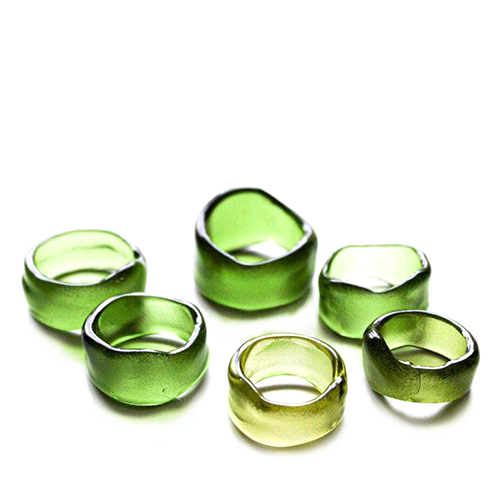
Dinosaur bone rings contain fossilized bones of Barney and his friends. His remains are cut up and used for inlays combined with meteorite iron, exotic wood, or other equally fascinating materials. A grim reminder that our remains might end up in family court one day.
Zirconium is a grayish-white metal similar to titanium, but with a ceramic-like feel. Zirconium is shatter-proof, relatively lightweight, skin-friendly, and cheap. Zirconium darkens when exposed to oxidation, so zirconium bands are usually jet-black. Zirconium is used in nuclear reactors due to its high heat and corrosion resistance, so it’s a safe bet that Homer Simpson wears a zirconium band.
Antlers of many different species, colors, and textures are used as an inlay material in wedding bands, serving as a constant reminder of senseless animal murder. Some animals died before their remains were dug up and desecrated.
Carbon fiber is a very lightweight, durable material made from organic polymers. These wedding bands are made entirely from carbon fiber or used as inlays. Carbon fiber rings are pretty durable and cheap.
Platinum Is a Universal Symbol of Luxury

White Gold Is an Impostor

White gold was developed in the 1920s as a less expensive alternative to platinum. Its purpose was simple: imitate platinum’s white appearance without its cost. When World War II broke out, the United States government declared platinum a strategic resource and restricted its use in nonessential applications, including jewelry. White gold consequently became the substitute of choice. After the war, it became the dominant white metal in mass-produced jewelry, while platinum remained largely associated with high-end work.
White Gold Is Bleached Yellow Gold
Pure gold is naturally yellow. Turning it white requires alloying it with other metals. Palladium is among the best additives because it produces a naturally white, stable alloy. Unfortunately, palladium is a platinum-group metal and is expensive. Nickel is considerably cheaper, which explains its widespread use in cheap mass-produced white gold jewelry. Nickel is a well-known cause of allergic contact dermatitis. Nickel sensitivity affects a substantial portion of the population, making nickel-bearing jewelry problematic for prolonged skin contact. The European Union introduced strict restrictions on nickel release from jewelry in 2009, although nickel-containing white gold remains available in the United States.
Platinum story

Spanish conquistadors were not particularly impressed by the white metal they discovered. While searching for gold in South America’s rivers, Spanish conquistadors encountered a stubborn white metal that refused to cooperate. It was too difficult to melt, impossible to process, and, worst of all, it wasn’t gold. The conquistadors, who had little patience for anything that couldn’t be turned into treasure, dismissed it as an annoying impurity in silver. Some even threw it back into the rivers. Their brain cells responsible for recognizing precious metals hit their limits. Platina, meaning “little silver” in Spanish, is not a great marketing name for a metal that would eventually become 50 times more valuable than silver itself. Had they traveled into the future, they might have shown a little more interest, but the flux capacitor has not been invented yet.
In the mid-18th century, British metallurgist Charles Wood experimented with Colombian platinum (that’s what he called the white powder brought to him from Jamaica. He shared his findings (and the powder) with William Brownrigg, who, in 1750, presented a report to the Royal Society in England describing platinum as a previously unknown metal with an exceptionally high melting temperature. At about the same time, Spanish explorer Antonio de Ulloa found platinum during a scientific expedition in Ecuador and introduced the metal to European scientific circles. In 1751, Swedish scientist Theophil Scheffer formally recognized platinum as a distinct precious metal, noting its remarkable resistance to corrosion and unusually high melting point. What the conquistadors had dismissed as worthless contamination turned out to be one of nature’s most remarkable metals. Platinum’s resistance to oxidation, chemical stability, density, and extraordinary melting temperature would eventually make it indispensable in science, industry, and fine jewelry.