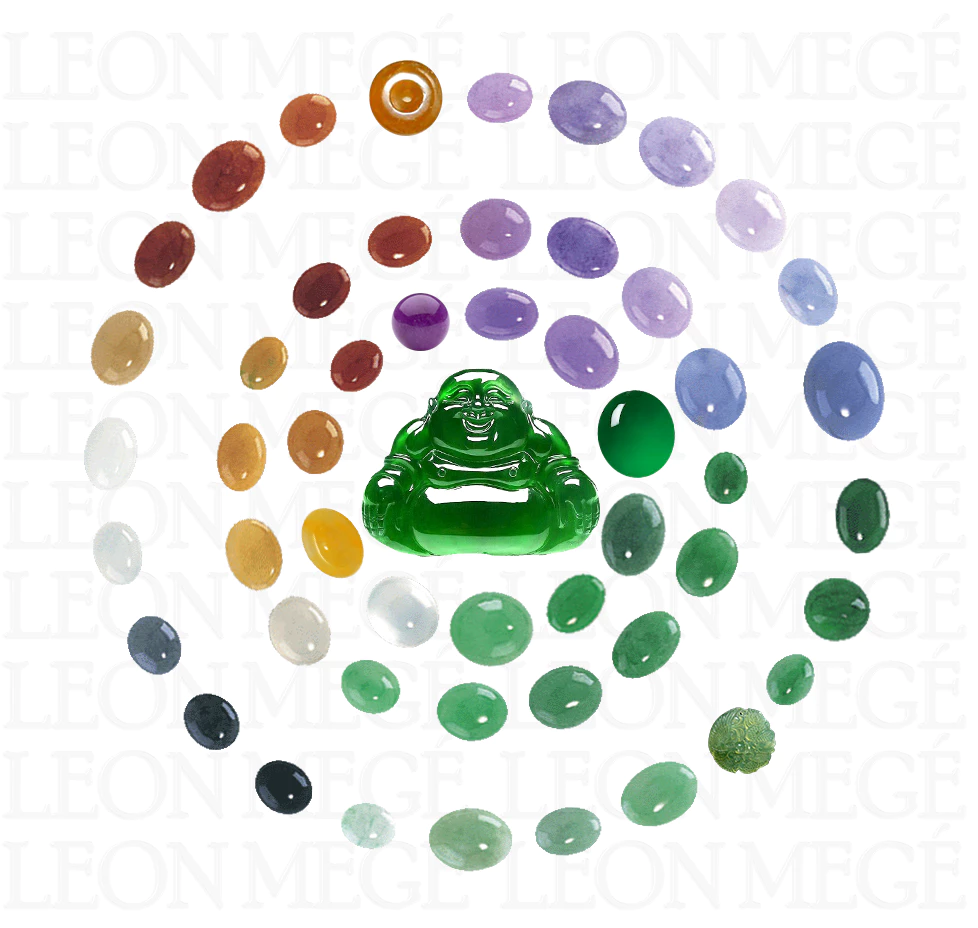
Jade has been revered in China for over 4000 years. The most valuable jade is the Imperial Jade, emerald-green semi-transparent to translucent Jadeite colored by chromium. It is mined in northern Myanmar at the Hpakan-Tawmaw jade tract in Kachin province. Jadeite and nephrite can look similar, and both are often called jade, but they have different chemical compositions, crystal structures, and hardness. The Chinese jade is nephrite because the rarer and more valuable Jadeite is found in Burma and hasn’t found its way to China until about 300 years ago.
Moonstone is a variety of mineral orthoclase. The mineral belongs to the feldspar family, which makes up more than half of the Earth’s crust. Moonstones have mysterious billowing light deep inside the stone caused by scattered light passing through the exsolution lamellae. Clear moonstone with a blue sheen, the most valuable kind, rarely exceeds 15 carats in size.
Those who do not love moonstones are patently bad people, like Inez, the protagonist’s fiancee, and her condescending, obnoxious, and close-minded parents in Woody Allen’s “Midnight in Paris.”
Moonstones are prized for their adularescence — a billowy, moonlight-like sheen. The transparent and colorless moonstones with blue adularescence are the most valuable, while translucent cabs with red and yellow adularescence, so-called rainbow moonstones, are common and inexpensive. Moonstones are usually cut in a smooth-domed cabochon shape to maximize the adularescence effect and minimize damage from scratches. Moonstone carvings are typically made from cheaper, translucent material.
The fine moonstones from Sri Lanka and Southern India are quite rare. The rainbow variety is found in India and Madagascar. Moonstones were the favorites of famous Art Nouveau jewelers, from Rene Lalique to contemporary artists such as Leon Mege. Even today, some Arab women secretly wear moonstones sewn into their clothing to symbolize fertility. Ancient Romans and Greeks believed that moonstones were made of crystalized moonlight. The Greeks’ name for moonstone was Aphroselene, coming from the names of the love goddess, Aphrodite, and the mood goddess, Selene. Moonstones are thought to have magical powers against all physical illnesses and emotional disorders.
Hemimorphite has been known as Electric Calamine since the 18th century. Adolph Kenngott named the new mineral Hemimorphite in 1853, and 1962 the International Mineralogical Association decided to keep the name over calamine. In 2020 crystals of hemimorphite crystals came to market from the Ojuela mine in Mapimi, Mexico. These have been proven to be deceptively stained using the artificial compound Phthalocyanine Blue BN. In ancient times Hemimorphite could ward off poisoning, negativity, hatred, malice, and danger in unsettling environments. Hemimorphite is a great stone to use when communicating with your loved one.
The aggregate cryptocrystalline mixture of quartz heliotrope (from Ancient Greek helios meaning “sun” and trepei “to turn” is known as bloodstone. Bloodstone represents a courageous spirit, mystical gem soldiers wore during battles.
Turquoise has been prized for over 5,000 years for its striking sky-blue to blue-green colors. The traditional December birthstone is a favorite of enthusiasts of American Southwestern and Native American jewelry.
Amazonite is potassium feldspar with a vitreous luster in shades of purple, grey, green, and blue. It is a greenish-blue opaque gem known to soothe anxiety and bring clarity to mind.
Chrysocolla is a relatively soft cyan (blue-green) opaque gemstone. It is a minor ore of copper with a hardness of only 2.5 to 7.0. Quartz, limonite, azurite, malachite, cuprite, and other secondary copper minerals are associated with chrysocolla.
Lapis Lazuli is an opaque gemstone valued for its deep blue ultramarine color. Lapis Lazuli is one of the precious stones mentioned in the Bible, included in the description of God’s throne. Some scholars believe the Ten Commandments tablets were carved out of Lapis Lazuli.
Malachite is an opaque mineral with a rich-green patterned surface and silky luster. Malachite is copper carbonate and is often mined as an ore to produce copper. Malachite signifies transformation and positive change.
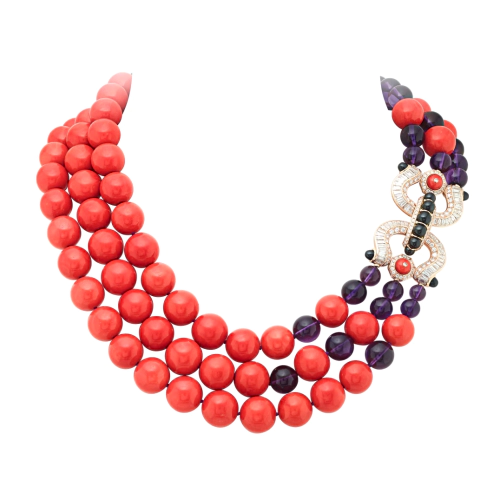
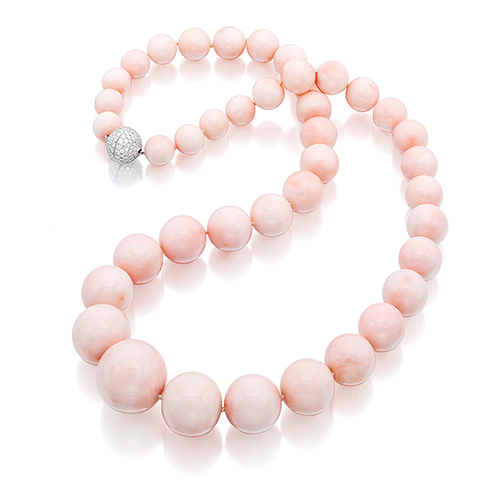
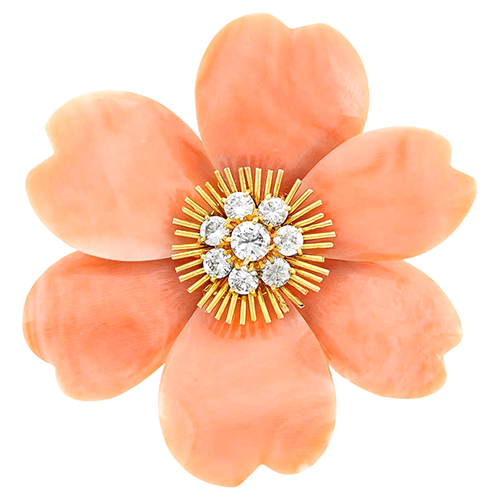
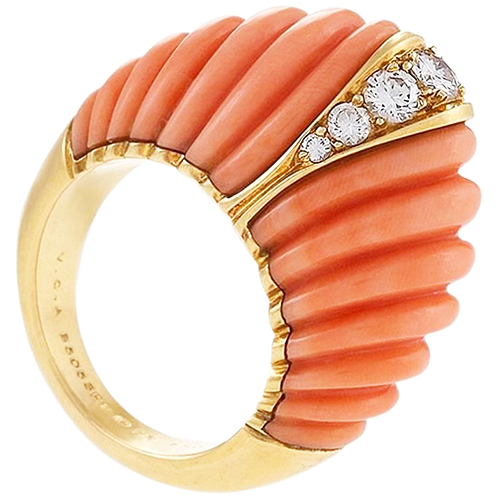
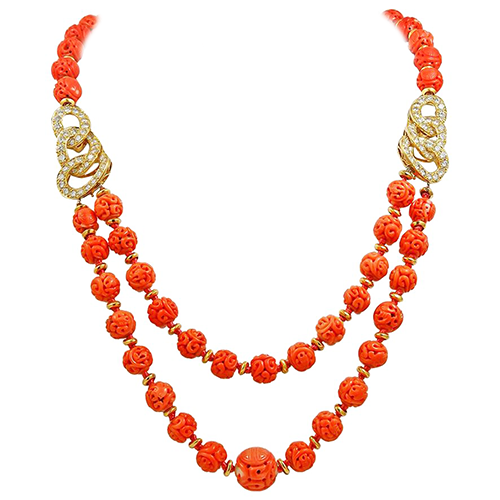
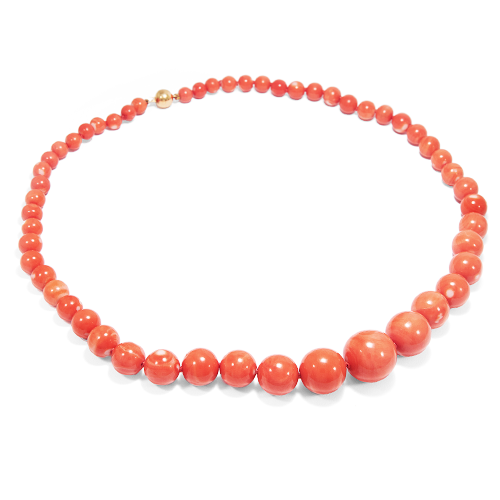
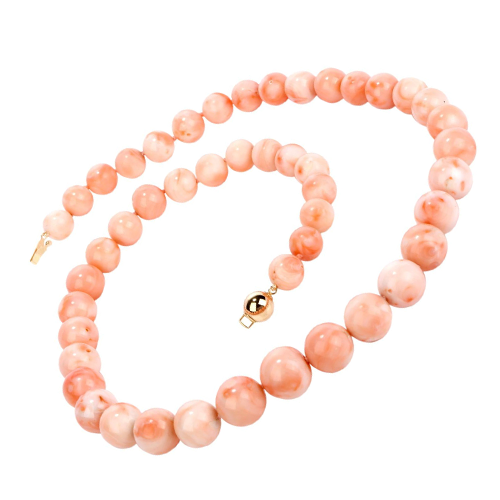
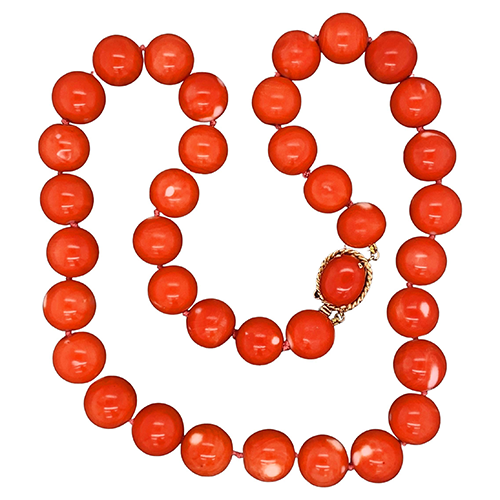
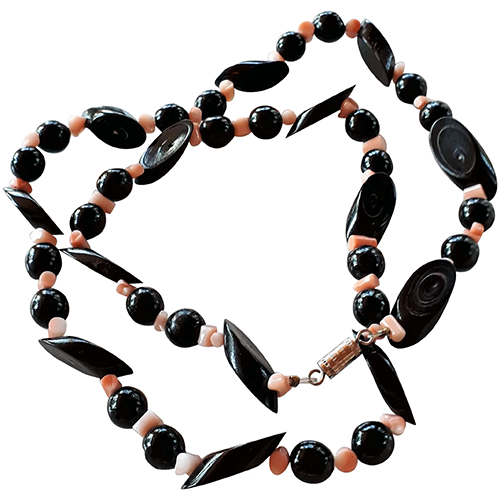
Corals are animals because they do not make their food like plants. They secrete a hard outer skeleton of limestone (calcium carbonate) that attaches to rocks. Except for the highly regulated Hawaiian black corals harvesting or exporting any corals from the US is illegal. Tumeric test for natural coral. Rub fresh, raw turmeric against the coral’s surface. Real coral gems will not leave marks. The imitation coral will stain turmeric red.
Rhodonite is a reddish-pink manganese metasilicate discovered in 1819 by C.F. Jasche and named after the Greek word meaning “a rose.” The mineral also occurs in brownish-red and black varieties with pink inclusions. Faceted gem-grade rhodonite is transparent to translucent and has a vitreous luster. It has perfect cleavage in two directions and pearly luster on the cleavage planes. Spiritually rhodonite harmonizes with rose quartz and emerald, offering immense healing to the heart and physical body.
Smithsonite is a zinc carbonate mineral in the calcite group but, unlike other minerals in this group, rarely forms crystals. This mineral is often found in the upper oxidized zones of zinc deposits, frequently as an alteration of Sphalerite. Smithsonite is also known in some circles as Zinc Spar.
Dumortierite is named after French paleontologist Eugene Dumortier (1803-1873). It has an attractive blue color and can be used in jewelry. Other colors include purple, pink, gray, and brown. Dumortierite is a durable mineral composed of dense fibers. Dumortierite inclusions in Quartz result in a natural blue Dumortierite Quartz is becoming increasingly popular as an alternative blue gemstone.
Amber is a fossilized tree resin appreciated since Neolithic times for its beautiful warm shades of yellow and orange and occasional prehistoric insect trapped inside.
Rhodochrosite is a manganese carbonate mineral ranging from light pink to bright red. The rhodochrosite, or “pink” in Greek, is associated with the rose color symbolizing love and affection. According to the Inca legend, rhodochrosites formed from the blood of their kings and queens. Rhodochrosite is a relatively soft gemstone that can be easily scratched or chipped and requires tender handling.
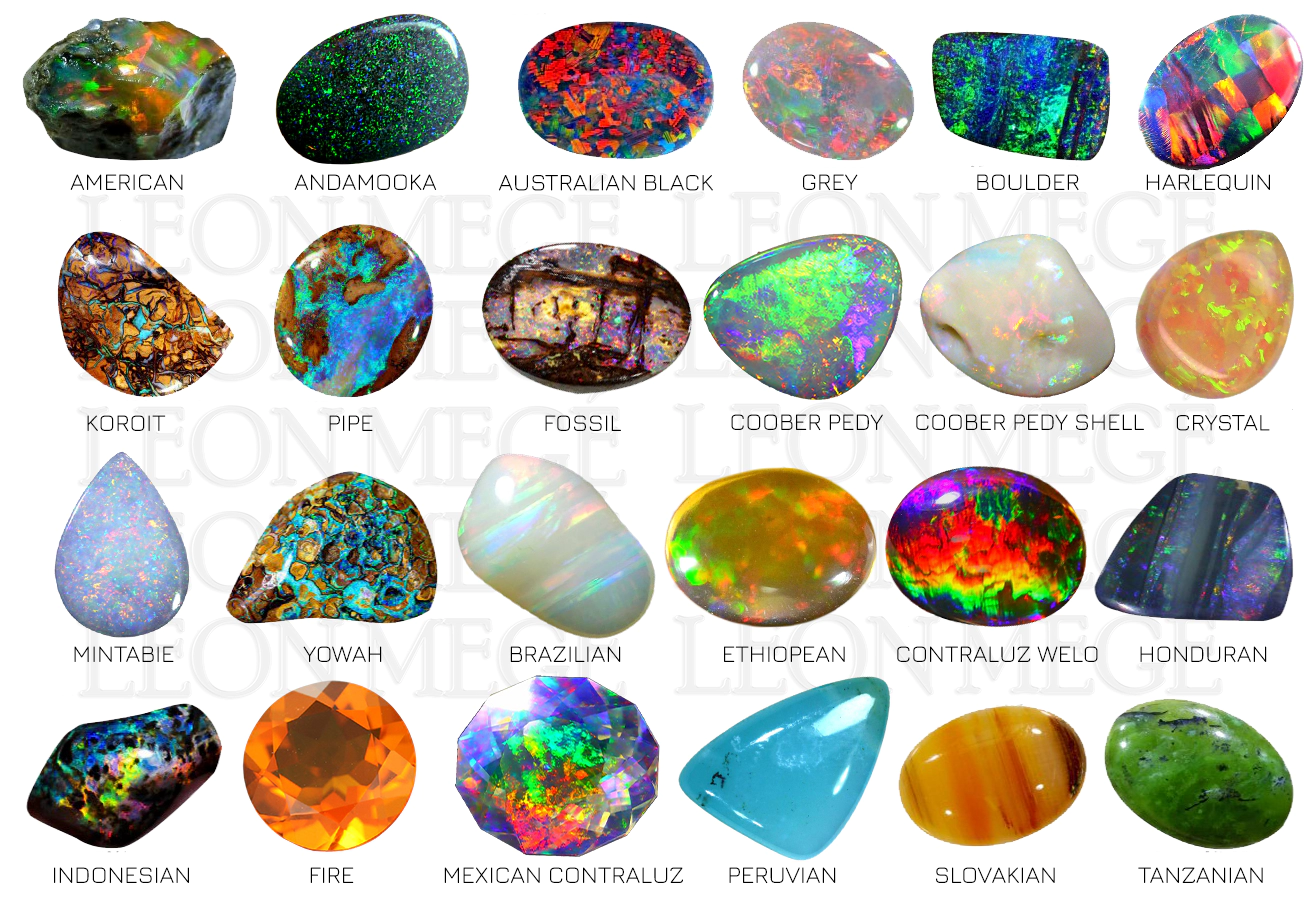
Opal is an amorphous mineral made up of small silica spheres suspended in water that accounts for up to 21 percent of its weight (typically 10-12). When opal is exposed to the sun for a prolonged period, it dehydrates and cracks.
The light diffraction gives opal its holographic appearance, called opalescence. It is a phenomenon in opals caused by spheres breaking the light into prime spectrum colors and producing random colorful flashes during movement. Larger silica spheres produce all colors, smaller ones only blues and greens. The red color is rare because it requires very large spheres.
White opals have pale green and pink colors on a milky white background. Black opals (rare and valuable) have a dark background and range from bright red to greens, blues, and purples. Boulder opals are natural host rocks with opal coating on top.
Most valuable opals, aptly named Harlequins, resemble the buffoon outfit with their distinct shimmering patches of various shapes and colors.
Colombian amber or Copal is only 1,6 million years old. It is a younger sister of the Baltic amber that is 40 million years old.
Quartz is one of the most common minerals worldwide as a standalone mineral or an important constituent in many rocks. Quartz has many different forms, habits, and colors under various names. Quartz crystals frequently twin, sometimes at a 90º angle. Chalcedony is a form of quartz and a member of the oxide mineral class. Agate, bloodstone, and tiger’s eye are just a few varieties.
While chalcedony is generally affordable, the highest quality blue chalcedony has a price of upwards of $100 per carat. Chalcedony has many religious and spiritual connections and implied healing properties.
Those benefits have seen its rise in use in meditation and Feng Shui. Its variety and Mohs hardness rating of 7 make it an excellent choice for birthstone jewelry.
Carnelian is a brownish-red variety of mineral chalcedony colored by iron oxide impurities commonly used as a semi-precious gemstone. The color can vary greatly, ranging from pale orange to dark brown, almost black. Cornell University appropriated carnelian and white school colors in the late 18 century. Carnelian is a play on the name “Cornell,” To emphasize the joke, the shade of red similar to carmine, is sometimes spelled Cornelian.
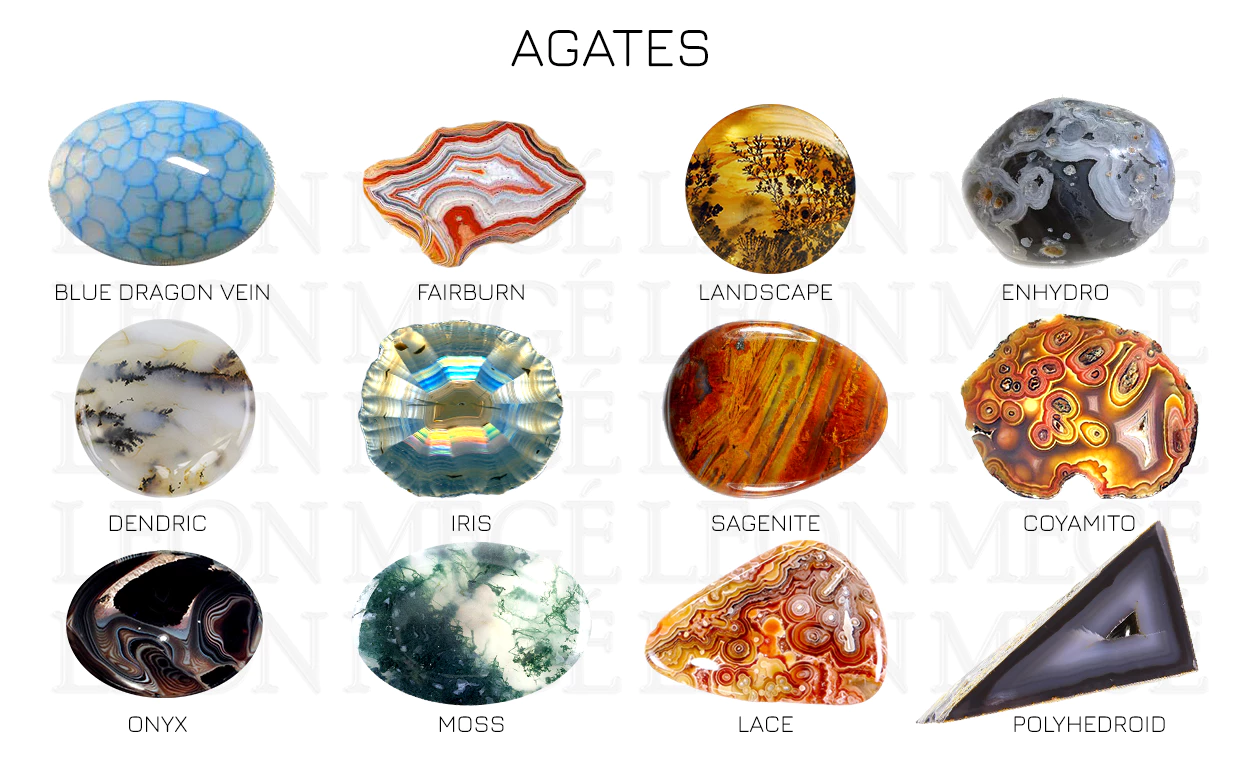
A distinctly banded fibrous multi-colored quartz and, technically speaking, a variety of chalcedony. Originally reported from Dirillo river (Achates river), Acate, Ragusa Province, Sicily, Italy. Mystery Mountain agate is known for its cathedral spires with red and bronze moss showcased in a milky white matrix with hot pink or cherry red highlights.
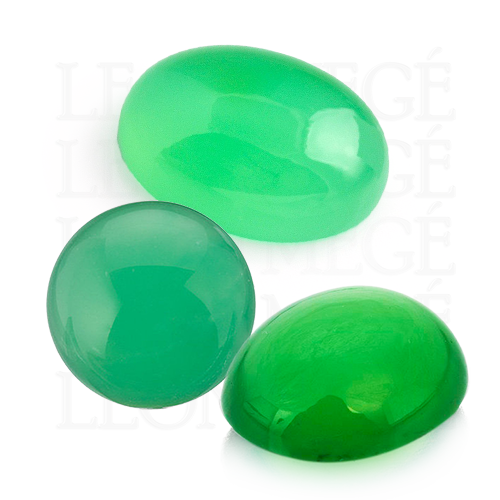
The finest chrysoprase has an apple-green color called imperial chrysoprase in an attempt to present it as an alternative to jade. The material from Marlborough Creek ranges from pure green to bluish-green. Yerilla chrysoprase has an undesirable yellowish tint.
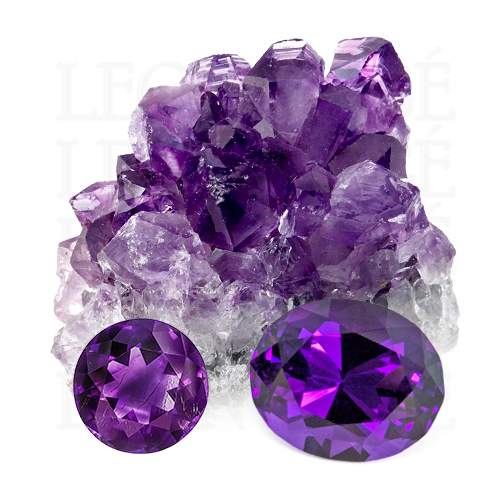
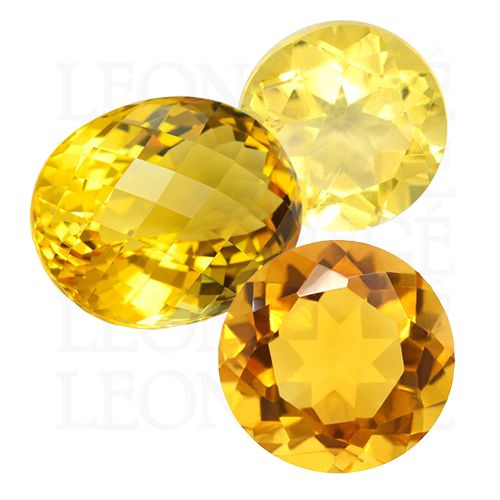
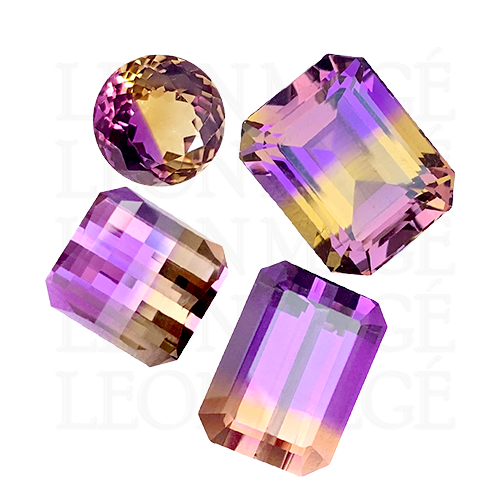
The variety of quartz Ametrine, also known as Trystine or Bolivianite, is a naturally occurring bastard child of Amethyst and Citrin. At first, a single crystal with distinct purple and yellow-orange zoning might make you flinch, but in the long run, it’s great stuff. Almost all commercially available Ametrine is mined in Bolivia.
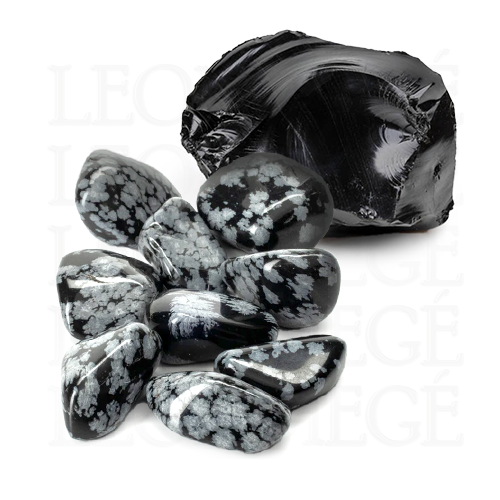
Obsidian is a natural volcanic glass formed when lava solidifies so quickly that mineral crystals do not have time to grow. Obsidian is similar in composition to rhyolite and commonly found along the rapidly cooled edges of dykes and sills. Obsidian is typically jet-black, although the presence of hematite (iron oxide) produces red and brown varieties, and tiny gas bubbles can create a golden sheen. The abundant volcanic mineral was the favorite of the Mayans and Aztecs, who valued it more than gold. In ancient Egypt, obsidian was a necessary cutting tool during mummification. Not naturally found in Egypt, it has been included in many royal burials as funerary accessories.
Jasper is an opaque variety of cryptocrystalline silica with a hexagonal crystal structure; its name comes from the Latin for spotted or speckled stone. Jasper is almost always multicolored with a consistent pattern. The color is usually earthy with a red, brown, yellow, or green overtone. Occasionally a jasper can be bluish, which is the most valuable variety.
Tiger’s eye is a chatoyant gemstone with a silky luster and alternating bands of rich golden brown color due to iron impurities. It occurs wherever quartz gets infested with Crocidolite or blue asbestos, retaining its fibrous structure.
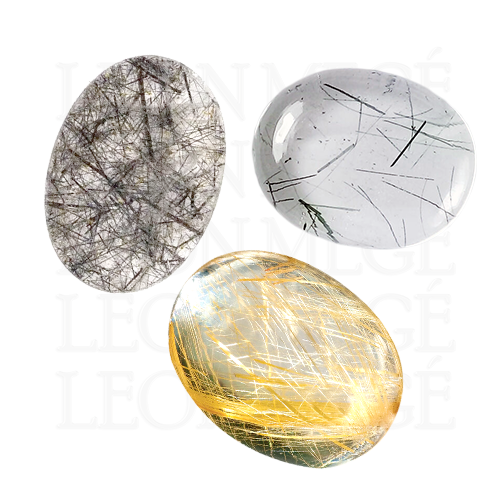
Opaque or translucent gemstones with many natural inclusions and markings are usually finished as cabochons with a smooth domed unfaceted surface and flat or slightly convex base. The term comes from the French word “caboche,” which means “head.” Phenomenal gems with chatoyancy or asterism are cut into cabochons. A cabochon may be made into any shape, but ovals rounds and cushions are the most common. Cabochons’ smooth domed surface reflects light turning them into colorful candy.
Understanding Metal Finishes Every metal finish falls into one of two categories: polished or textured.…
International Shipping The cost of international shipping is not included in the purchase price; please…
[show_post id="206111"] Buying jewelry is a compulsive act of frivolous excessive callous unnecessary spending Leon…
Engagement Ring AI There are three basic engagement ring styles: Solitaire, Halo, and three- or…
Wearing a wedding band next to an engagement ring is a cause for concern and…
Revered for their incredible beauty and mythical origins, Argyle pink diamonds are highly coveted as…
This website uses cookies.